If you don’t speak Arabic, you might assume memorizing the Quran is out of reach, or at least much harder for you than for an Arab. In practice, a huge share of the world’s huffaz learned the Quran without speaking Arabic as their first language: children in Pakistan, Bangladesh, Indonesia, Malaysia, Turkey, Nigeria, Senegal and the West. They read the script, learned the sounds, and memorized.
That doesn’t mean language makes no difference. It does, in specific ways. Knowing where the extra difficulty comes from lets you work around it.
What’s actually harder
You can’t lean on meaning to guess the next word
An Arabic speaker who forgets a word can often reconstruct it from the sense of the ayah. You can’t, at least at first. So you rely more on sound and on the picture of the page.
Similar passages are harder to tell apart
When two ayat differ by one word, an Arabic speaker notices that the meaning changes. Without the meaning, the difference is just a sound, which makes mutashabihat a bigger challenge.
Pronunciation takes deliberate practice
Several Arabic sounds don’t exist in English, Malay or Turkish, and Urdu speakers often say letters like ض, ع and ق the Urdu way. If you don’t learn them properly, you’ll memorize the mistakes along with the words.
What’s not harder
Memory for sound and sequence works the same in any language. Children memorize long surahs before they understand a word of them. The Quran itself says Allah has made it easy to remember, and the ayah is repeated four times in Surah Al-Qamar (Al-Qamar 54:17). That ease isn’t limited to native speakers.
Practical tips
1. Get your reading right first
Spend time with a teacher on the letters that don’t exist in your language: ع, ح, خ, غ, ق, ص, ض, ط, ظ and the heavy and light letters. A few weeks of focused practice now saves you years of correcting memorized mistakes. See Do You Need Tajweed Before Starting Hifz?
2. Lean on listening
Because you can’t rely on meaning, the sound of the recitation does more work for you. Listen to each lesson several times before you memorize it and keep one reciter for consistency. Memorizing the Quran by Listening explains how to use audio well.
3. Use the page
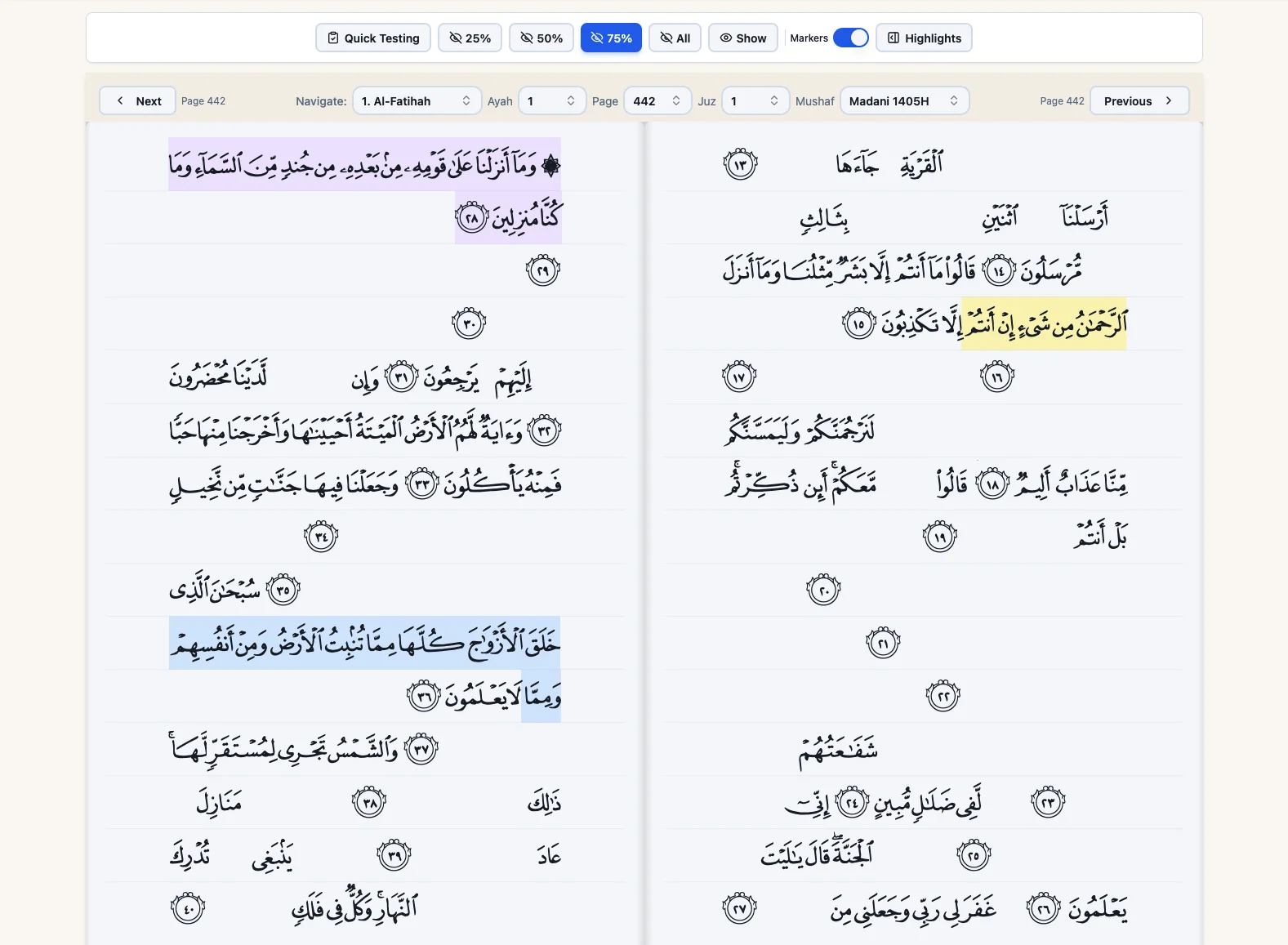
Memorize from one mushaf and notice where each ayah sits. Your visual memory of the page helps a lot when you can’t use meaning. Why You Should Memorize From One Mushaf has more on this.
4. Read a translation of each lesson
You don’t need to learn Arabic to get some of the benefit of meaning. Before memorizing a passage, read a translation of it in your language. Know what the passage is about: is it a story, a command, a description of the Day of Judgment? Even a rough sense of the content helps you remember the ayat in order.
Many translations are free on quran.com, which offers them in dozens of languages side by side with the Arabic.
5. Learn the words that repeat
A small number of words make up a large part of the Quran: Allah, rabb, qala, alladhina, amanu, ard, samawat, yawm, and so on. Learning the most common few hundred gives you a surprising amount of understanding. Word-by-word translations, which show the meaning under each Arabic word, are a good way to pick them up as you memorize.
6. Pay extra attention to similar phrases
When you notice a phrase that you’ve seen before, stop and compare the two places. Note exactly what’s different: a word, a letter, the order. Write the difference down. The mutashabihat mode in the Quran Memorizer app was built for this: it highlights a shared phrase and asks you which ayah you’re actually in.
Should you learn Arabic as well?
If you can, yes. Understanding the Quran in its own language changes how you recite it. Allah says He sent it down as an Arabic Quran so that people would understand (Yusuf 12:2), and He repeatedly asks us to reflect on it (Sad 38:29).
But don’t wait to finish an Arabic course before you start memorizing. The two support each other, and you can do both at the same time. Many students find that hifz makes Arabic easier, because they already know so many phrases by heart. There’s more on combining them in Should You Learn the Meaning While Memorizing?
A word of encouragement
If memorizing feels harder for you than for the Arab student next to you, remember that effort itself is rewarded. The Prophet ﷺ said that the one who recites the Quran with difficulty, stumbling over it, gets two rewards (Sahih Muslim 798a).
Start with your reading, start small, and keep going. How to Memorize the Quran: A Step-by-Step Guide for Beginners walks through the first month.
At the Dubai International Holy Quran Award, Gulf News found that many contestants who had memorized the whole Quran didn’t understand a word of Arabic. One young contestant started at ten and finished in a year and nine months. It was hard at the beginning, he said, but he was determined, and his next goal was learning Arabic.