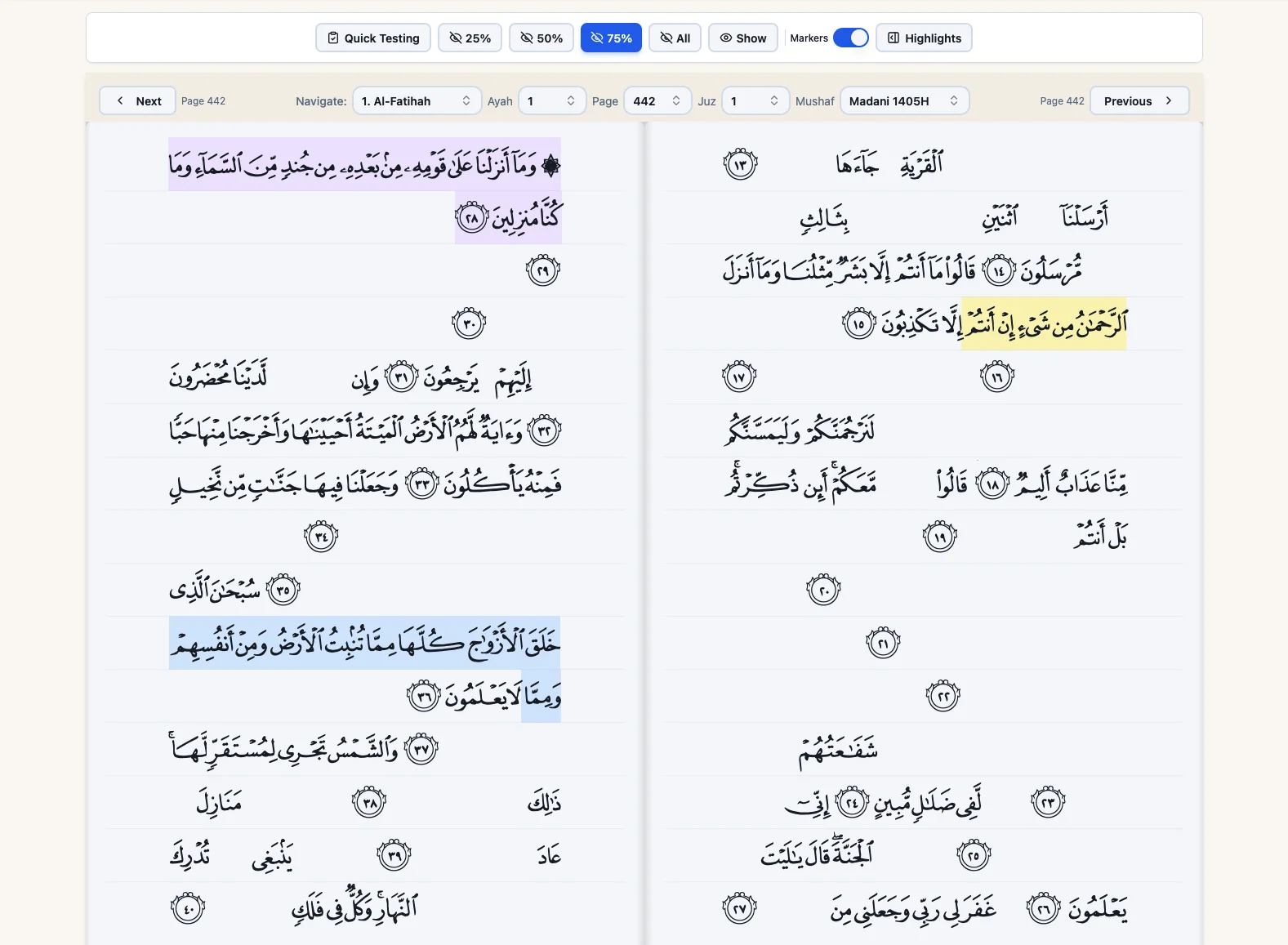

Spaced repetition means reviewing something just as you’re about to forget it, then waiting a little longer before the next review. Each successful review pushes the next one further out. It’s one of the most reliable findings in memory research, and it maps naturally onto hifz revision. We cover the research in the science of memorizing the Quran.
The practical question for hifz is: what should one review item be? A single ayah, a page, a whole surah?
The options
- By ayah. Precise, because you review exactly the ayat you get wrong. The downside is a huge number of small items, and it’s easy to lose the flow between ayat. Best for fixing specific mistakes and similar verses.
- By page. Matches how most huffaz think and how teachers test, and keeps the picture of the page. A page can hide one weak ayah among strong ones. Best for most revision, especially from a printed mushaf.
- By surah. Natural for short surahs and for recitation in salah. Long surahs become huge, uneven units. Best for Juz Amma and other short surahs.
- By juz or hizb. Simple to plan as a full revision cycle, but too coarse for spacing, since weak pages wait as long as strong ones. Best for huffaz keeping a 15 or 30-day cycle.
What most people end up doing
A mix works best:
- Pages as the main unit. Schedule revision page by page. It matches the mushaf, it’s what teachers test, and it keeps the number of items manageable: 20 per juz.
- Ayat for problem spots. When a particular ayah keeps going wrong, pull it out and give it its own short schedule until it’s fixed. A mistake log is a simple way to do this on paper.
- Surahs for short ones. In Juz Amma, a surah is often less than a page, so treat each surah as one item.
A simple spacing schedule
After a page is first memorized, review it from memory on roughly these days:
- Day 1, 2, 4, 7, 14, 30, then every month or two.
If a review goes badly, start that page’s schedule again from a short gap. If it goes perfectly, you can stretch the next gap a little. That’s all spaced repetition really is: shorter gaps for what’s weak, longer gaps for what’s strong.
This fits easily into the traditional sabaq, sabqi and manzil structure. Sabqi covers the short early gaps, and manzil covers the long ones.
Doing it on paper
You don’t need software. A notebook with one line per page works:
- Write the page number, the date you last revised it, and the date it’s next due.
- Each day, revise the pages that are due.
- Mark weak pages so they come back sooner.
It gets fiddly once your hifz grows past a few juz, which is where an app helps.
Doing it with an app
General flashcard apps can do spaced repetition, but they treat the Quran as a pile of separate cards. Hifz needs more: reviewing a range of ayat in order, testing from random starting points, and knowing which of your pages are memorized in the first place.
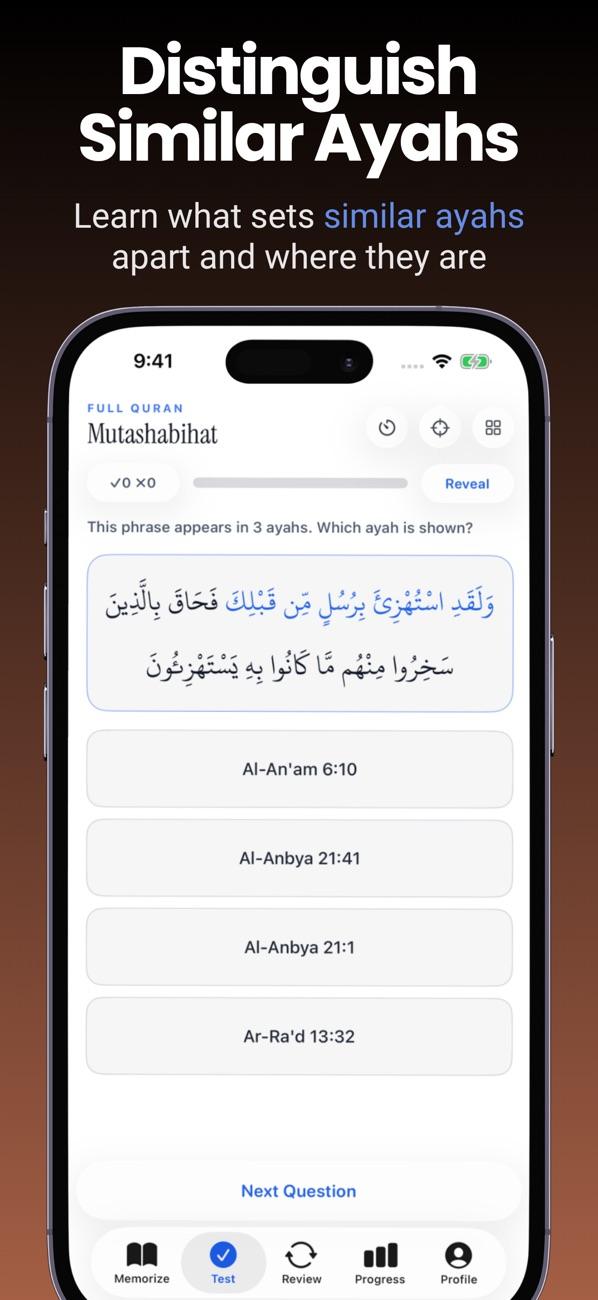
Quran Memorizer is built around this. Its daily review rotates through the portion you’ve memorized and brings back the ayat you get wrong more often, so the spacing happens without you managing a schedule.
Keep reciting in order too
Spaced repetition decides when to review. It doesn’t replace reciting long stretches in order, which keeps the joins between ayat and pages strong. Keep some continuous recitation in your week, ideally in salah, alongside whatever spacing system you use. See next-ayah and previous-ayah practice for working on the joins directly.