
Most people revise by reciting everything and hoping the weak spots improve. They usually don’t. The same ayah trips you up week after week because nothing about your revision changes when you make that mistake.
A mistake log fixes that. It’s a single page where you write down every slip, so revision time goes where it’s actually needed.
What to record
Make each entry short. For each mistake, write:
- Where: surah and ayah, or the page number if you think in pages.
- What happened: the word you said, the ayah you skipped, or where you paused.
- The fix: the correct wording, or the cue that tells you which way to go.
- The type: a one-letter code so you can spot patterns.
- Clean recitations: a tick each time you get it right on a later day.
Here’s a simple set of codes:
- W wrong word
- S skipped an ayah or phrase
- O order (ayat in the wrong order)
- SIM mixed up with a similar passage elsewhere
- E wrong ayah ending
- T tajweed
- H hesitation (you got it, but only after a long pause)
An example
- Al-Mulk 67:16 to 17 (type O). Mixed up which ayah comes first. The fix: both open the same way; 16 is the earth swallowing you, 17 is the storm of stones. Two clean recitations so far.
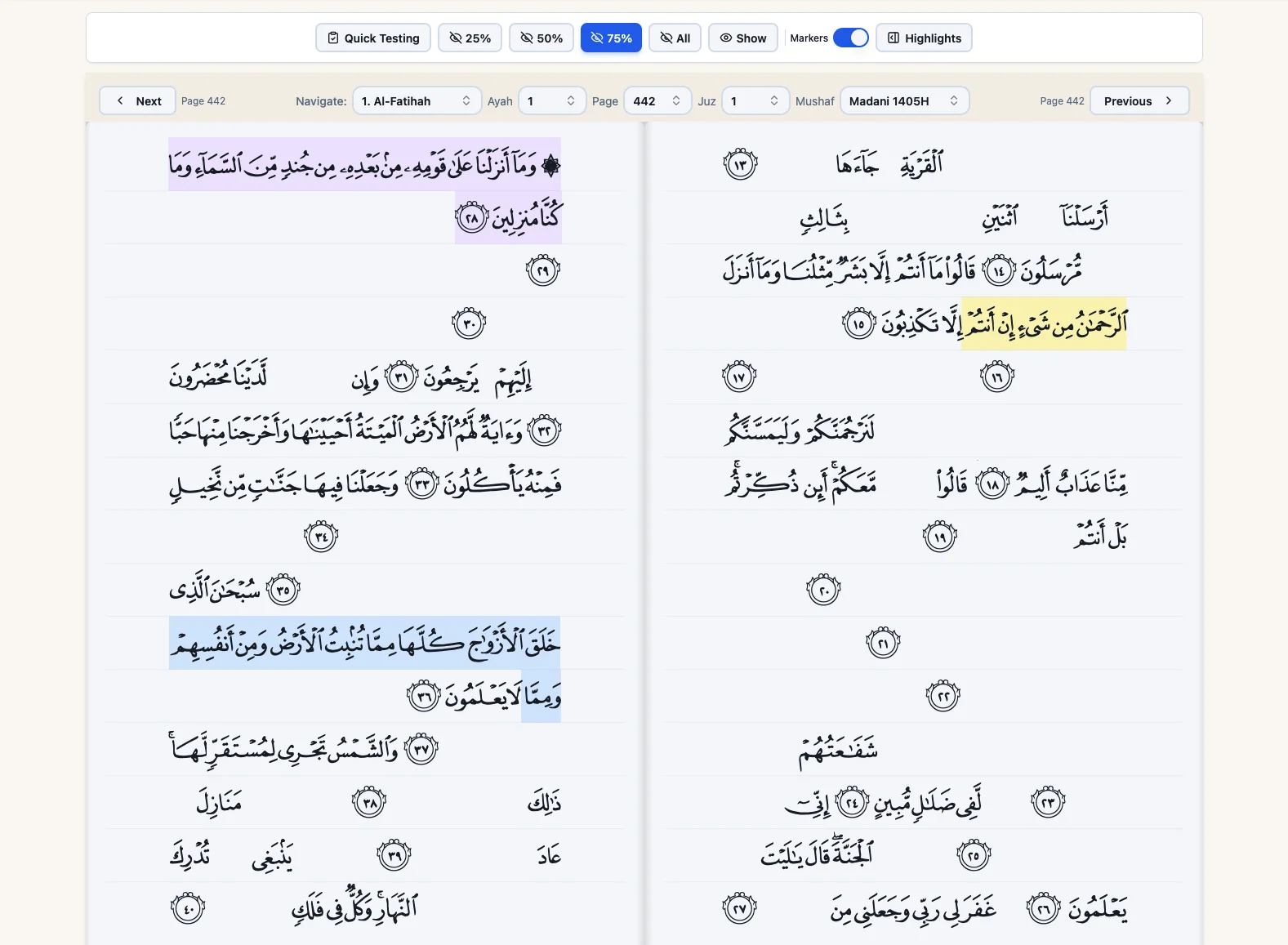
- Ya-Sin, page 441 (type H). Paused at the top of the page. The fix: the page starts at ayah 13, where the story of the town begins. One clean recitation.
- Al-Baqarah 2:58 vs Al-A’raf 7:161 (type SIM). Used the Al-A’raf wording in Al-Baqarah. The fix: these are similar passages with different words; compare the wording of each on quran.com. Not yet clean.
In your own log, write the exact wording that differs. That’s what helps you remember the fix.
The fix is the part that matters most. Writing “Al-Mulk 16” isn’t enough. Writing what distinguishes it from the ayah you confused it with gives you something to remember next time.
In the app
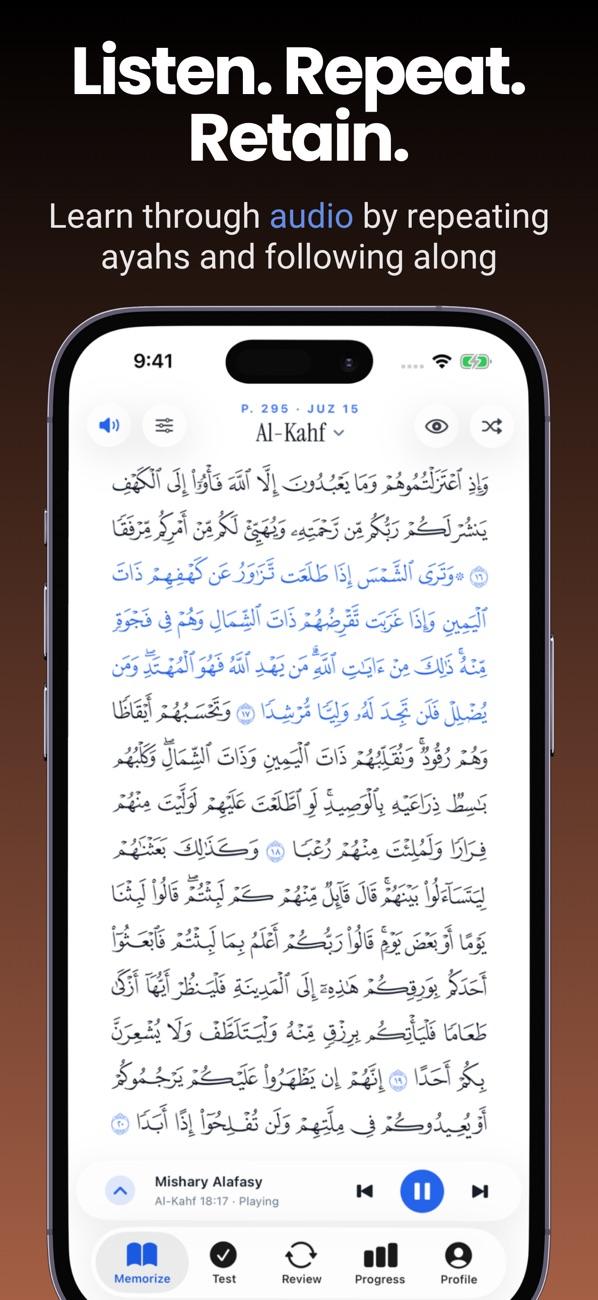
Rather not track it on paper? Quran Memorizer notices the ayat you get wrong and asks about them more often in your daily review, until you stop missing them.
How to use the log
- Before each revision session, read the open entries. It takes a minute and reminds you of the exact spots where you’ve made mistakes before.
- Recite those ayat first, with a little of what comes before and after each one.
- Add a tick when you recite an entry cleanly on a new day.
- Retire it after three ticks on three different days. Cross it out, but don’t erase it. Old entries are useful when the same type of mistake comes back.
Once a week, scan the type column. If most of your entries are SIM, you need dedicated work on similar verses. If most are H, your hifz is mostly correct but not yet automatic, and more recitation from memory (not from the mushaf) is the answer.
Similar passages need a different approach
Entries marked SIM are the most stubborn because two correct passages are competing. For those, compare the two side by side, note the exact words that differ, then recite each one in its own context. Our guide on how to memorize similar Quran verses without mixing them up goes through this in detail.
Paper or app?
Paper works well, and many teachers prefer it because they can see it. An app is handy because it can log mistakes for you. In Quran Memorizer, every question you get wrong or hesitate on is recorded, and the daily review brings those ayat back more often until you get them right.
Use whichever you’ll actually stick with. The habit matters more than the format.
Related guides
- A revision plan for the pages you keep forgetting
- 12 common hifz mistakes and how to fix each one
- Why you can recite from the start but not from a random ayah