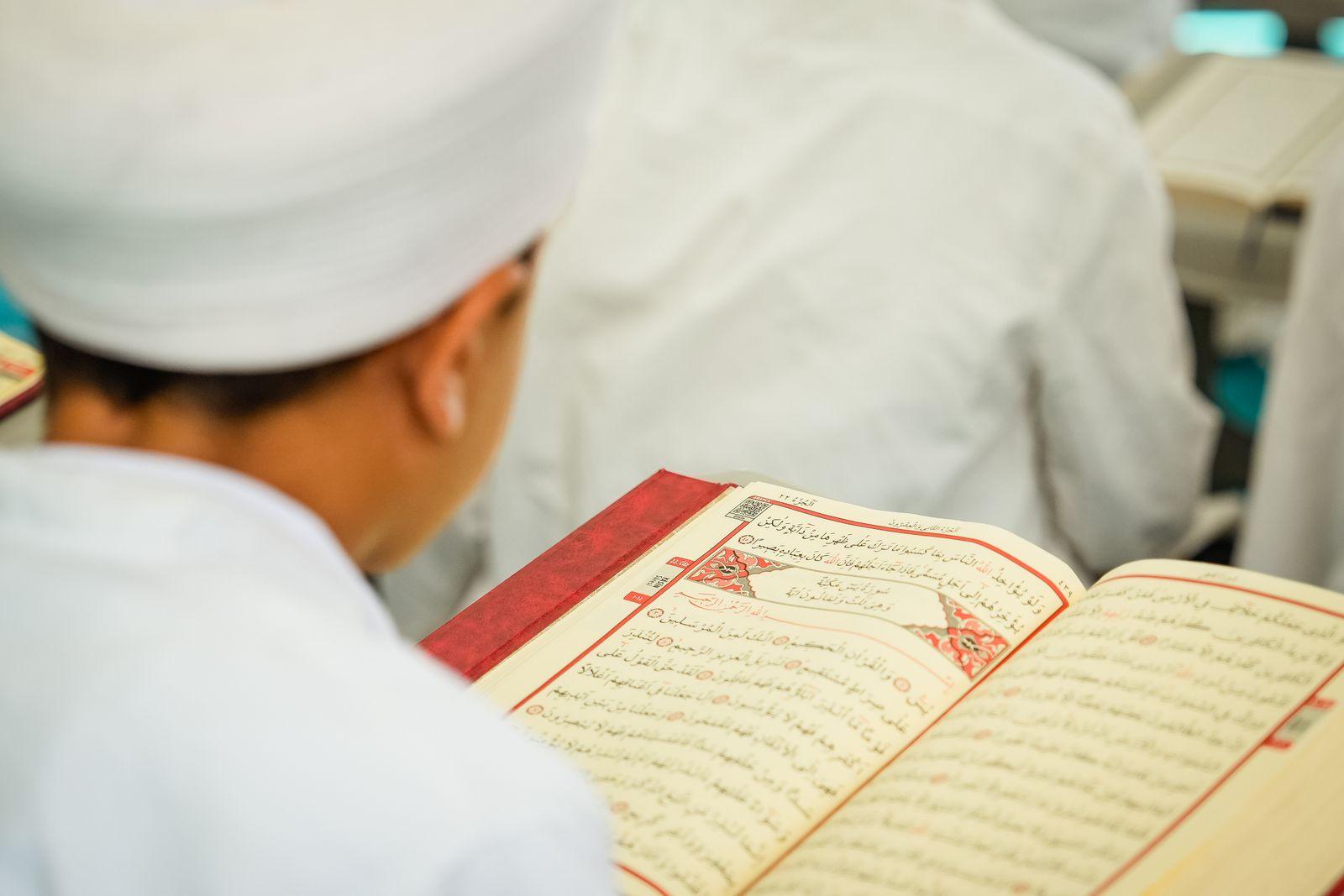
School finishes at half three. There’s a snack, a change of clothes, and by five your child is at the madrasa. They’re back around seven, tired, with homework from both places. On paper they’re memorizing a few lines a day. But ask them to recite a surah they finished last spring and it comes out in pieces.
It’s not the madrasa’s fault, and it’s not your child’s. New lessons get most of the time, and nobody hears the old surahs often enough. The fix is small and it happens at home: ten minutes, most evenings, with you listening.
In short
- Madrasa time goes mostly on new lessons. Older surahs get the least attention, so they’re the first ones children forget.
- Ten minutes at home on four or five days a week covers it. Not straight after madrasa, when they’re worn out.
- You don’t need perfect Arabic to help. Follow along in the mushaf and note where they stop.
- If it’s too much, cut the new lines before you cut the revision.
Two hours a night, most of their childhood
Evening madrasa is a huge part of growing up Muslim in Britain. A 2011 study by the Institute for Public Policy Research cited estimates of around 2,000 madrassas in the UK, attended by about 250,000 children, and found that most go for up to two hours on evenings after school and at weekends, for most of their young lives (IPPR, Inside Madrassas). The same report noted two things every parent will recognise: children arrive tired after a full school day, and most madrassas set a little homework, usually something to memorize for the next lesson.
So the homework is new lines. What nobody sets as homework is the surah your child finished three months ago. That one needs you.
If your child’s Quran class is only at the weekend, everything here still applies. The gaps are just longer, which makes the home part matter more.
What the madrasa covers, and what it can’t
In a typical hifz or nazirah class, the teacher hears each child’s new lesson (the sabaq) and, if there’s time, the last few days of lessons (the sabqi). With a room full of children, that’s often all the time there is. The older portion, the manzil, gets the least attention, and it’s the part children start forgetting without anyone noticing, until a test or Ramadan shows it up. If those words are new to you, our hifz vocabulary explains them.
None of that is a criticism of the teacher. One adult can’t listen to twenty children recite everything they know. Revision at home is how families have always filled that gap.
Ten minutes, and where to put them
Straight after madrasa is usually the worst time. They’ve just done two hours, they’re hungry and there’s school homework waiting. Better slots, depending on your house:
- Before school. In winter, when Fajr is around six, a few minutes after Fajr or at breakfast works well for children who wake easily.
- In the car or on the walk. They recite, you listen. No mushaf needed if you know the surah, and it’s easy to do every day.
- Before bed, with you sitting beside them. Short surahs suit this best.
- In salah. Ask them to recite an older surah in their prayers each day, not just Al-Ikhlas.
What to revise: the surah they finished most recently, plus one older one, rotating through everything they know over a week or two. That’s it. Write the rotation on a piece of paper on the fridge so nobody has to remember whose turn it is.
Free tool
Give our planner the surahs or juz your child knows and how many days a week you’ll revise, and it splits them into a rotation for you. Open the manzil planner →
How to listen when your Arabic isn’t strong
Lots of parents worry that they can’t help because they can’t correct tajweed. You don’t need to. Tajweed is the teacher’s job. Yours is to notice where your child hesitates, skips or needs a prompt.
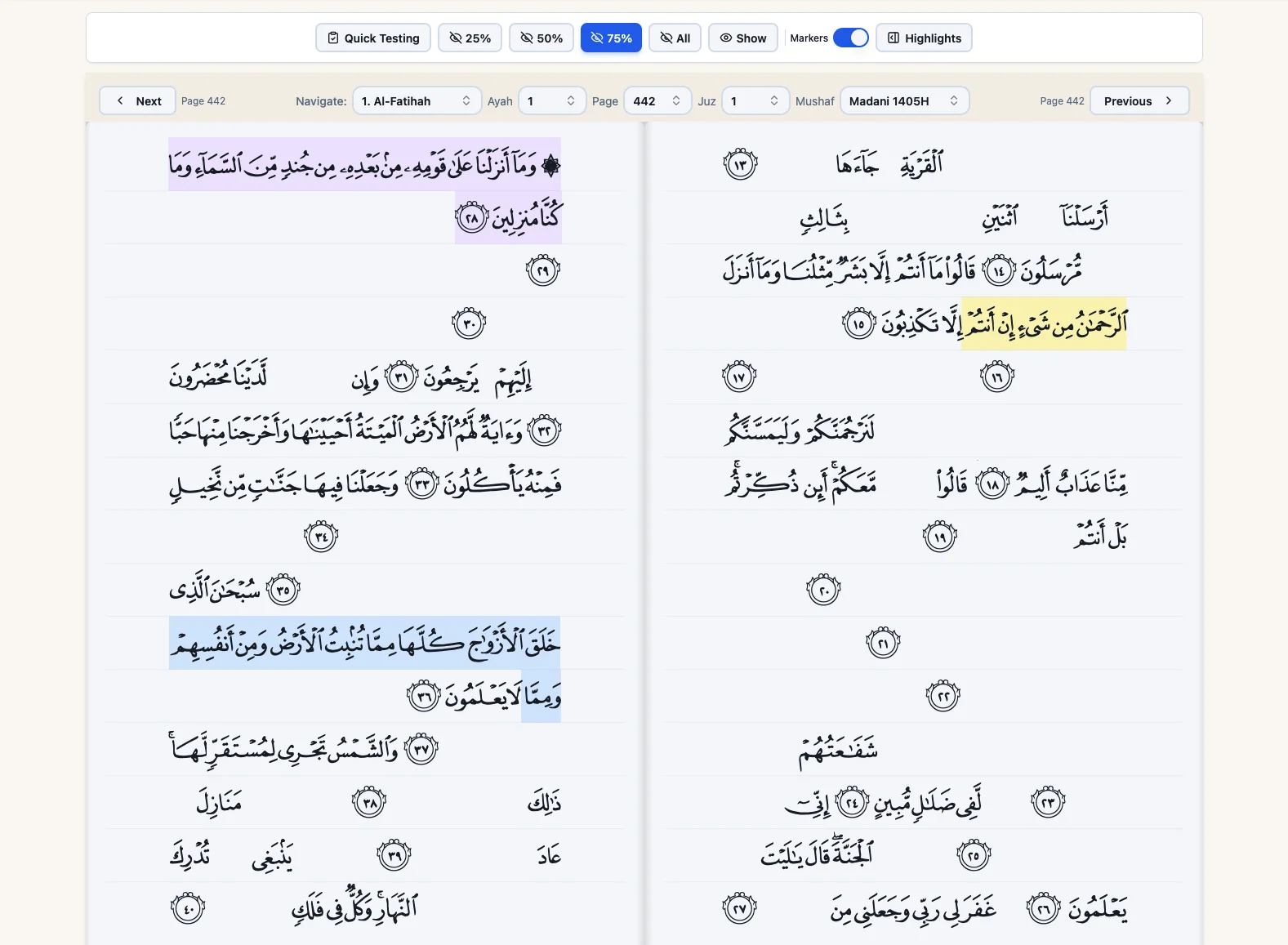
Follow along in a mushaf with a pencil, or in an app that shows the text. When they stop, give the first word, let them carry on, and put a small dot by that ayah. After a week you’ll have a handful of dots, and they’ll tell you exactly which ayat need work. Pass that list to the teacher. Our mistake log guide shows a simple way to track it.
Test from the middle, not just from the start
Children are brilliant at reciting from the first ayah. Each ayah pulls the next one along. The real check is to read out an ayah from the middle and ask, “What comes next?” If they can carry on from anywhere, the surah is properly memorized. If they can only do it from the top, they’re relying on each ayah to lead into the next, and one forgotten ayah stops everything.
Once or twice a week is plenty. Our random ayah spot test walks through how to do it in five minutes.
It can be done alongside school
When Safiya Islam finished memorizing the whole Quran at the age of ten, the East London Mosque reported that she had started in Year 3 and completed it in Year 6, alongside her ordinary school day at Al Mizan School. Asked what kept her going, she credited her parents and teachers (East London Mosque).
Most children won’t finish the whole Quran by ten, and they don’t need to. What’s worth noticing is the order she gave: parents first. The adult at home holding the routine steady matters more than any app or timetable.
Talk to the teacher
Ask the teacher which surahs your child should be revising this week, and whether there’s anything they keep getting wrong. Teachers usually know exactly where the weak spots are; they just don’t have time to fix them all in class. A two-minute chat at pick-up once a month makes the home revision far more useful.
When it gets too much
The IPPR researchers also found that six or seven days a week of schooling can be a real source of stress for some children. Watch for the signs: dread before madrasa, tears over homework, or a child who used to enjoy reciting and now avoids it.
If that’s where you are, cut the new lines first. Two or three lines a day that your child can revise properly will take them further than a page they can’t hold on to. Our guide on when to pause new hifz and revise explains how to make that call, and our summer holiday plan shows how to use the long break to go back over what they’ve forgotten.
Where we fit in
If you’d like the tests set for you, Quran Memorizer’s free test asks what comes next, what came before and which surah an ayah is from, on the surahs you mark as memorized. Hand your child the phone for five minutes after dinner and you’ll see which surahs need more revision before the teacher does.
Questions people ask
How can I help my child revise madrasa lessons at home?
Spend about ten minutes on most days listening to one recent surah and one older one, rotating through everything they know. You don’t need strong Arabic: follow in the mushaf, give the first word when they stop, and note which ayat needed help.
Should my child revise straight after madrasa?
Usually not. After a school day and two hours of madrasa, most children are too tired to revise well. Before school, in the car, before bed or inside their daily prayers tend to work better.
What if I can’t read Arabic well enough to check my child?
Your job is to notice hesitations and skipped ayat, not to correct tajweed. Follow along in a mushaf or an app that shows the text, mark where they stopped, and pass that list to their teacher.
My child is overwhelmed by madrasa and school. What should we do?
Reduce new memorization before you reduce revision. A few lines a day that your child can revise properly is better than a page they forget, and a short pause to repair older surahs is often the quickest way back.