
Reciting to a teacher or a friend is the best way to check your hifz. But plenty of people memorize on their own, at odd hours, with nobody available to listen. You can still test yourself properly. It just takes a bit more structure, because the easiest person to fool is yourself.
The problem with checking yourself
When you recite alone with the mushaf nearby, it’s tempting to glance at it “just to confirm.” When you stumble, you tend to remember it as a small pause rather than a mistake. And you naturally pick the passages you already know well.
Each method below gets around one of these problems.
1. Record yourself
Record your recitation on your phone with the mushaf closed, then play it back while following in the mushaf. This is the closest thing to having a listener.
- You hear mistakes you didn’t notice while reciting, especially small ones like a wrong pronoun ending or a skipped “wa.”
- Hesitations are obvious on a recording.
- You can keep recordings and compare them a month later.
Start with one page at a time. Listening back to a full juz takes a long time.
2. Let something else choose where you start
Picking your own starting point lets you avoid weak spots without meaning to. Instead:
- Use a random number to pick a page from your memorized portion.
- Shuffle a stack of cards with page numbers or surah names on them.
- Use an app that picks ayat for you. Quran Memorizer does this from the portion you’ve marked as memorized.
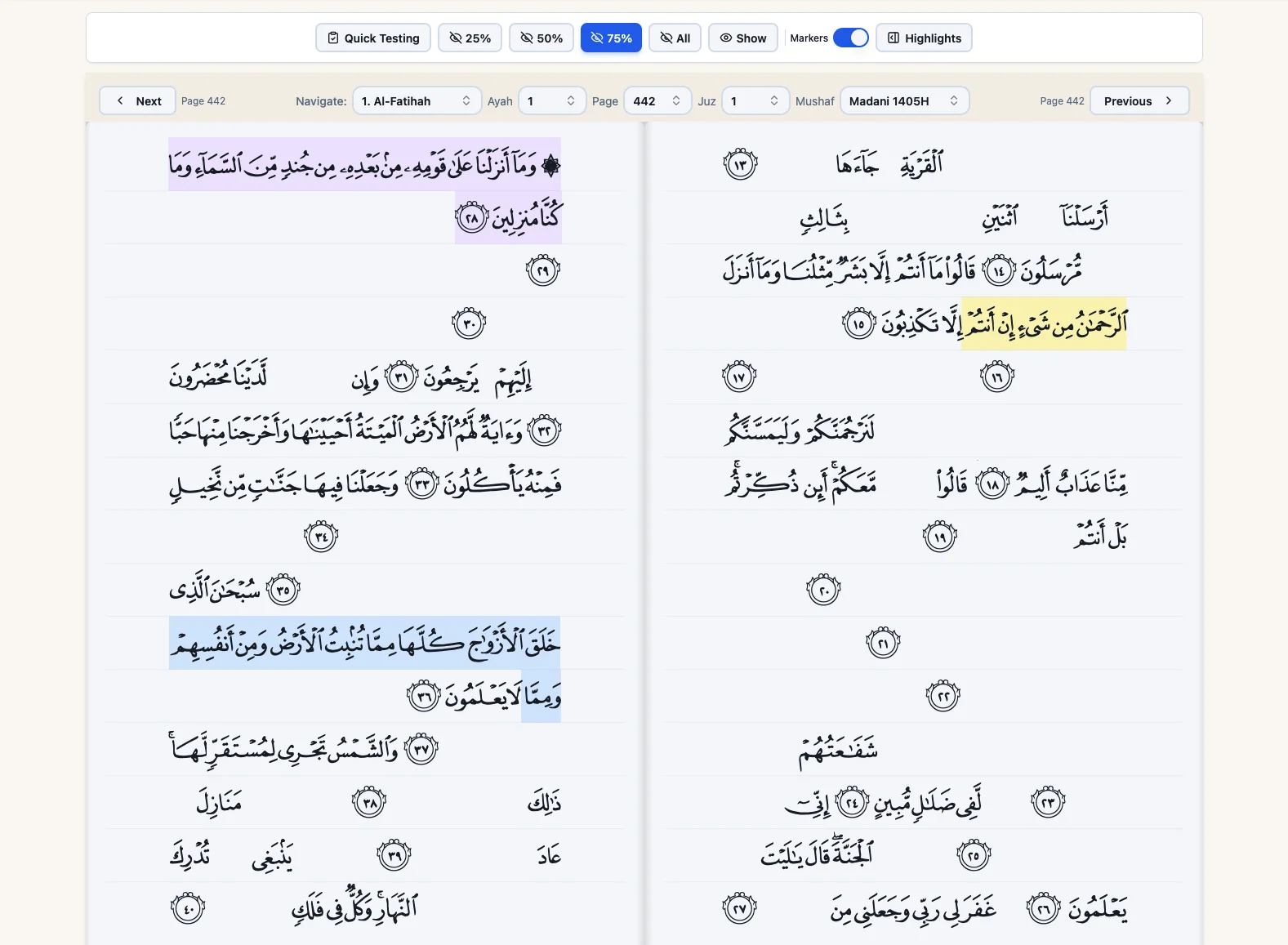
Our random ayah spot test has a full routine you can follow.
3. Write it out
Writing an ayah or a short passage from memory, then checking it letter by letter, catches errors that recitation hides: a wrong harakah, a missing letter, a word you’ve been slurring. It’s slow, so use it on short passages or on spots you suspect. See memorizing by writing.
4. Answer questions instead of reciting
Short questions test specific parts of your memory:
- What comes after this ayah? What comes before it?
- How does this ayah end?
- Which surah is this from?
- Which of these similar phrases belongs here?
They’re quick and they pinpoint exactly what’s weak. They don’t test your recitation, so use them alongside reciting, not instead of it.
5. Use salah
Reciting from memory in prayer is a natural test, because there’s no mushaf to glance at and stopping is awkward. Plan which passages you’ll recite in your sunnah prayers each day, and note anywhere you got stuck afterwards.
Keep an honest record
Whatever methods you use, write the results down: the date, what you tested, and what went wrong. A simple mistake log works well. Without a record, it’s easy to remember last week’s test as better than it was.
When to find a listener anyway
Self-testing can’t fully check tajweed, and it can’t catch an error you’ve been making consistently for months. Try to recite to a qualified teacher from time to time, even once a month online. Our guide to finding a hifz teacher has options, including what to do until you have one.