The first ten ayat of Surah Al-Kahf are one of the most memorized passages in the Quran, and for good reason. Abu ad-Darda’ narrated that the Prophet ﷺ said whoever memorizes the first ten ayat of Surah Al-Kahf will be protected from the Dajjal (Sahih Muslim 809). In the long hadith about the Dajjal, he ﷺ also told whoever meets him to recite the opening ayat of Al-Kahf over him (Sahih Muslim 2937).
One version of the first hadith says “the end of Surah Al-Kahf” instead (Sahih Muslim 809b), and Abu Dawud records both wordings (Sunan Abi Dawud 4323). Many people memorize both the first ten and the last ten to be safe. We’ll start with the opening.
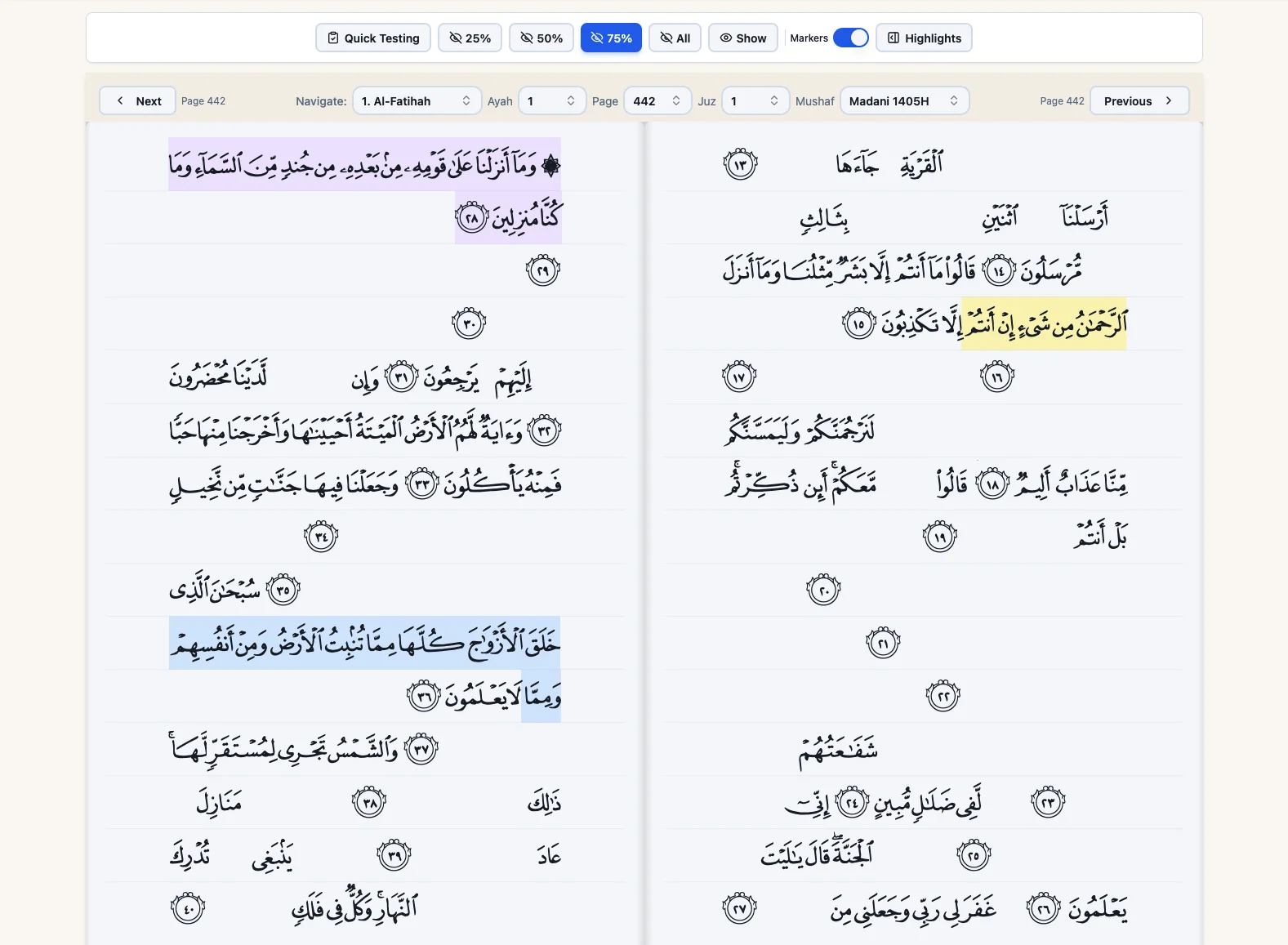
It’s short: twelve lines, about three quarters of a page in the standard Madani mushaf, starting on page 293 and finishing halfway down page 294. Most people can memorize it in three to five days. You’ll also see the passage called Al-Kahf 1–10, or Al-Kahfi ayat 1–10 in Indonesian and Malay.
The ten ayat
Here is the Arabic, ayah by ayah, as it appears in the Uthmani script on quran.com.
ٱلْحَمْدُ لِلَّهِ ٱلَّذِىٓ أَنزَلَ عَلَىٰ عَبْدِهِ ٱلْكِتَـٰبَ وَلَمْ يَجْعَل لَّهُۥ عِوَجَا ۜ ﴿١﴾
قَيِّمًا لِّيُنذِرَ بَأْسًا شَدِيدًا مِّن لَّدُنْهُ وَيُبَشِّرَ ٱلْمُؤْمِنِينَ ٱلَّذِينَ يَعْمَلُونَ ٱلصَّـٰلِحَـٰتِ أَنَّ لَهُمْ أَجْرًا حَسَنًا ﴿٢﴾
مَّـٰكِثِينَ فِيهِ أَبَدًا ﴿٣﴾
وَيُنذِرَ ٱلَّذِينَ قَالُوا۟ ٱتَّخَذَ ٱللَّهُ وَلَدًا ﴿٤﴾
مَّا لَهُم بِهِۦ مِنْ عِلْمٍ وَلَا لِـَٔابَآئِهِمْ ۚ كَبُرَتْ كَلِمَةً تَخْرُجُ مِنْ أَفْوَٰهِهِمْ ۚ إِن يَقُولُونَ إِلَّا كَذِبًا ﴿٥﴾
فَلَعَلَّكَ بَـٰخِعٌ نَّفْسَكَ عَلَىٰٓ ءَاثَـٰرِهِمْ إِن لَّمْ يُؤْمِنُوا۟ بِهَـٰذَا ٱلْحَدِيثِ أَسَفًا ﴿٦﴾
إِنَّا جَعَلْنَا مَا عَلَى ٱلْأَرْضِ زِينَةً لَّهَا لِنَبْلُوَهُمْ أَيُّهُمْ أَحْسَنُ عَمَلًا ﴿٧﴾
وَإِنَّا لَجَـٰعِلُونَ مَا عَلَيْهَا صَعِيدًا جُرُزًا ﴿٨﴾
أَمْ حَسِبْتَ أَنَّ أَصْحَـٰبَ ٱلْكَهْفِ وَٱلرَّقِيمِ كَانُوا۟ مِنْ ءَايَـٰتِنَا عَجَبًا ﴿٩﴾
إِذْ أَوَى ٱلْفِتْيَةُ إِلَى ٱلْكَهْفِ فَقَالُوا۟ رَبَّنَآ ءَاتِنَا مِن لَّدُنكَ رَحْمَةً وَهَيِّئْ لَنَا مِنْ أَمْرِنَا رَشَدًا ﴿١٠﴾
And the Saheeh International translation:
“[All] praise is [due] to Allah, who has sent down upon His Servant [Muhammad (ﷺ)] the Book and has not made therein any deviance.”
“[He has made it] straight, to warn of severe punishment from Him and to give good tidings to the believers who do righteous deeds that they will have a good reward [i.e., Paradise].”
“In which they will remain forever”
“And to warn those who say, ‘Allah has taken a son’.”
“They have no knowledge of it, nor had their fathers. Grave is the word that comes out of their mouths; they speak not except a lie.”
“Then perhaps you would kill yourself through grief over them, [O Muhammad], if they do not believe in this message, [and] out of sorrow.”
“Indeed, We have made that which is on the earth adornment for it that We may test them [as to] which of them is best in deed.”
“And indeed, We will make that which is upon it [into] a barren ground.”
“Or have you thought that the companions of the cave and the inscription were, among Our signs, a wonder?”
“[Mention] when the youths retreated to the cave and said, ‘Our Lord, grant us from Yourself mercy and prepare for us from our affair right guidance.’”
Al-Kahf 18:1-10, Saheeh International translation. Compare translations on quran.com
Listen: Al-Kahf 18:1–10 on quran.com plays the ten ayat one by one with the reciter of your choice. Hearing them a few times before you start is the easiest first step.
Think you know all ten? Close the mushaf and test your hifz. You choose the portion, and the test asks you to carry on from an ayah inside it.
The shape of the passage
Knowing what each group of ayat is about makes the order much easier to hold.
- Ayat 1 to 3: praise and purpose. Allah is praised for sending down the Book with no crookedness in it, straight, to warn of punishment and to give good news to believers who do good, a reward they will stay in forever.
- Ayat 4 and 5: the warning. A specific warning to those who say Allah has taken a son, a claim made without knowledge.
- Ayat 6 to 8: consolation and the test. The Prophet ﷺ is told not to grieve himself to death over those who don’t believe. What is on the earth is an adornment to test people, and it will all become barren ground.
- Ayat 9 and 10: the story begins. The People of the Cave are introduced, and the passage ends with the young men’s dua as they take refuge in the cave.
If you can say those four headings in order, you’ll rarely jump to the wrong ayah.
Use the rhyme
Every one of the ten ayat ends on the same “-a” sound. Write the ending words down and say them in a row until they’re automatic:
عِوَجَا · حَسَنًا · أَبَدًا · وَلَدًا · كَذِبًا · أَسَفًا · عَمَلًا · جُرُزًا · عَجَبًا · رَشَدًا
‘iwaja, hasana, abada, walada, kadhiba, asafa, ‘amala, juruza, ‘ajaba, rashada.
When you get stuck mid-recitation, the ending word of the ayah you just finished often pulls the next one out.
A five-day plan
- Day 1: Ayat 1 to 3. Listen to them five times with the mushaf open, then recite each ayah until you can say it three times without looking, then chain the three together.
- Day 2: Ayat 4 and 5. Start the session by reciting 1 to 3 from memory, then add the new ayat the same way.
- Day 3: Ayat 6 to 8, after reciting 1 to 5.
- Day 4: Ayat 9 and 10, after reciting 1 to 8.
- Day 5: No new material. Recite all ten from memory three times, at three different points in the day, and fix any hesitations.
If you already know Arabic well or you’ve heard this passage many times, you might finish in two or three days. That’s fine. Don’t skip day five.
Pronunciation points
- The pause after ayah 1. In the Hafs recitation there’s a short pause without breath (a saktah) on عِوَجَا, marked by a small س above the word. If you join ayah 1 to ayah 2, you pause briefly on the alif, then continue with قَيِّمًا. Listen to a reciter you trust to hear how it’s done.
- Ayah 5 is the longest. It has three clauses, and the middle one, كَبُرَتْ كَلِمَةً تَخْرُجُ مِنْ أَفْوَٰهِهِمْ, is where most people trip. Practice it on its own.
- مِن لَّدُنْهُ and مِن لَّدُنكَ. Ayah 2 has min ladunhu (from Him) and ayah 10 has min ladunka (from You). It’s an easy pair to swap. Remember that ayah 10 is a dua, so it speaks to Allah directly.
If your tajweed is still developing, see whether you need tajweed before starting hifz. The short answer is to learn alongside a teacher or a good recording rather than wait.
What about the last ten ayat?
The other wording of the hadith in Sahih Muslim mentions the end of the surah. That’s ayat 101 to 110, about twelve lines that all sit on page 304, the last page of Al-Kahf. They open with those whose eyes were covered from Allah’s remembrance and close with the final ayah of the surah:
قُلْ إِنَّمَا أَنَا بَشَرٌ مِّثْلُكُمْ يُوحَىٰ إِلَيَّ أَنَّمَا إِلَٰهُكُمْ إِلَٰهٌ وَاحِدٌ ۖ فَمَن كَانَ يَرْجُو لِقَاءَ رَبِّهِ فَلْيَعْمَلْ عَمَلًا صَالِحًا وَلَا يُشْرِكْ بِعِبَادَةِ رَبِّهِ أَحَدًا
Say, “I am only a man like you, to whom has been revealed that your god is one God. So whoever would hope for the meeting with his Lord – let him do righteous work and not associate in the worship of his Lord anyone.”
Al-Kahf 18:110, Saheeh International (quran.com)
The same five-day plan works for the ending: two or three ayat a day, with the last day spent reciting all ten from memory. You can read and listen to them on quran.com.
Revise it for life
Memorizing ten ayat is quick. Revising them takes a little routine:
- Recite them in your sunnah prayers for the first couple of weeks.
- Recite them every Friday as you begin Surah Al-Kahf.
- If you want to keep going, our guide to memorizing the whole of Surah Al-Kahf breaks the rest into its four stories.
- For another short passage worth memorizing, Ibrahim’s dua in Surah Ash-Shu’ara is seven ayat that ask for wisdom, a good name and a sound heart.
The Quran Memorizer daily review brings these ten ayat back in rotation with everything else you know, so they come up on their own without you having to remember to revise them.
Questions people ask
Is it the first ten or the last ten ayat of Al-Kahf?
Both wordings are in Sahih Muslim (809 and 809b), and the long hadith about the Dajjal in Sahih Muslim 2937 mentions reciting the opening ayat of Al-Kahf. Many people memorize both to be safe.
How long does it take to memorize the first 10 ayat of Surah Al-Kahf?
Most people take three to five days, learning two or three ayat a day. The passage is twelve lines, about three quarters of a page of the 15-line mushaf.
Where do the first ten ayat end?
At the end of ayah 10, the dua of the young men in the cave, which ends with the word rashada (right guidance). In the Madani mushaf it’s about halfway down page 294.
What are the first 10 ayat of Surah Al-Kahf about?
They open by praising Allah for sending down the Book without any crookedness, warn those who say Allah has taken a son, and give good news to the believers. Ayat 9 and 10 begin the story of the young men of the cave, ending with their dua for mercy and right guidance.
Do I have to recite the first 10 ayat every Friday?
The hadith in Sahih Muslim 809 is about memorizing them, with no set day. Reciting Surah Al-Kahf on Friday comes from a separate narration about the whole surah. Many people simply revise the first ten every day or two so they stay strong.