
Your timetable changes every few weeks. One rotation starts at 7am, the next has on-calls, and exam blocks swallow everything for a month. Somewhere in there you want to memorize the Quran, or at least not lose the juz you already have. It’s easy to decide hifz will have to wait until you qualify.
It doesn’t have to. Doctors, medical students and law students have memorized the Quran during their degrees, and their routines have a lot in common. None of them found more hours in the day. They made hifz fit the shape of a demanding course, and protected revision above everything else.
In short
- Plan by phase, not by week: lecture terms, placements, exam blocks and on-calls each need a different routine.
- New lessons go first thing; revision goes in the gaps, on the commute and in salah.
- Exam blocks: pause new lessons, never revision.
- Use what you know about studying: active recall and spacing work for hifz too.
People who did it
Bushra Tbakhi, a final-year medical student, wrote about memorizing the whole Quran in about two and a half months while on hospital rotations five days a week (first published by The Ideal Muslimah). That pace isn’t a target for most people, but her methods work at any pace: she worked in chunks of four to six pages, capped herself at half an hour a page, used one mushaf every day, recited to her mother, sister and friends so there was always someone to listen, and when reviewing large amounts, tested herself on the beginning of each ayah.
Dr Nazir Khan, a neuroradiologist and assistant professor at McMaster University in Canada, memorized the Quran in his youth, has served as an imam for many years, and holds ijazah in the ten readings, alongside a residency and a neuroradiology fellowship (Yaqeen Institute). A demanding medical career didn’t crowd out the Quran for him.
At the 2018 Dubai International Holy Quran Award, two of the contestants were in medicine: a third-year medical student from Uganda who gave the best performance of the opening night, and a 24-year-old doctor from Amman (Gulf News). And it isn’t only medicine. Rahaf Blan, a law student at An-Najah University, kept a daily portion of memorization through her degree and says it “was never an obstacle to university studies” (An-Najah University).
Plan by phase, not by week
Demanding degrees don’t have a normal week. They have phases, and each one needs its own routine:
| Phase | New lessons | Revision |
|---|---|---|
| Lecture terms | Your main growing season: a few lines to half a page after Fajr | Daily, from memory |
| Clinical placements or heavy terms | Smaller: a few lines before you leave | Commute, breaks, and in salah |
| Exam blocks | Paused | Shorter, but every day |
| On-calls and nights | None | Recite your manzil in your prayers |
| Holidays and electives | Catch-up season: more new lines if revision is solid | Daily, plus recite to someone |
Rewrite the plan at the start of each rotation or term, not just once a year. A routine that worked in second year lectures will collapse on a surgical placement, That doesn’t mean your willpower failed. The phase has changed.
Free tool
Mark your pages strong, shaky or weak and get a daily revision cycle that fits the time you actually have this term. Open the manzil planner →
Use what you already know about studying
If you’ve revised for medical or law exams, you already know the two things that matter most. Active recall: testing yourself beats rereading. And spacing: material you’re about to forget should come back sooner, and material you know well can wait. Plenty of medical students build their whole exam revision around flashcard apps that work this way.
Hifz works on the same principles. Reading a page you’ve memorized feels productive, but it’s the rereading trap. Reciting with the mushaf closed, starting from random points, and bringing your weak pages back more often is the active recall and spacing version. We go into the difference in why you can recite a surah but freeze when you’re tested.
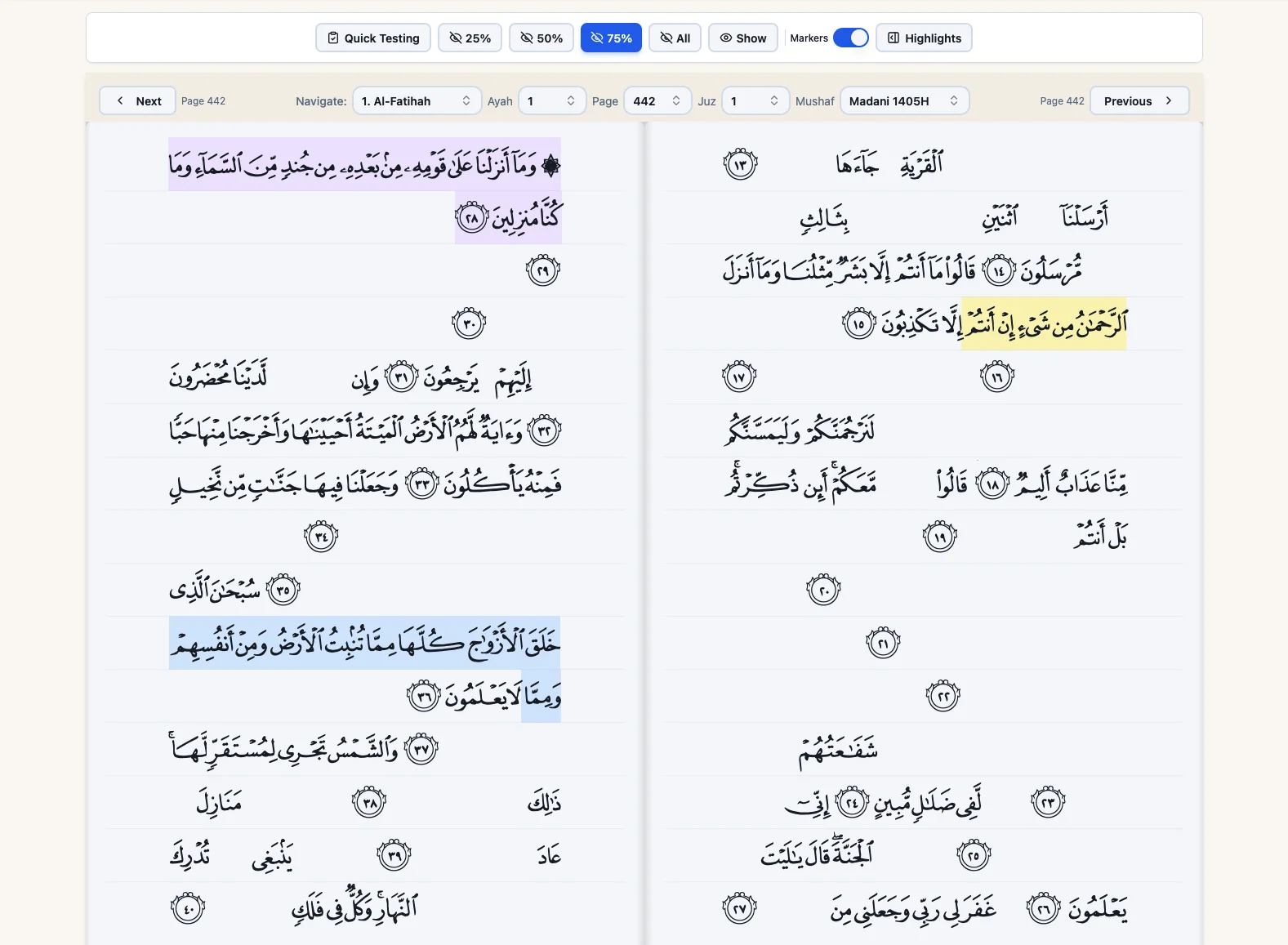
That’s also how we built Quran Memorizer. It asks you questions from memory on what you’ve marked as memorized, and with Premium its daily review brings back the ayat you miss more often, a bit like a flashcard deck for your hifz. If you’re already living in spaced-repetition apps, try the free test on a juz you think is solid.
Making the gaps count
- The commute: listen to the lines you’re revising, then recite them in your head with the audio off.
- Salah: the most reliable revision slot you have. Recite recent lessons in your sunnah prayers and older juz in your night prayer.
- Ward breaks and library breaks: five minutes of being tested from random points is worth more than fifteen minutes of rereading.
- One listener: a classmate, a sibling, a parent on the phone. Someone hearing you once a week keeps the routine honest.
If you’ve already forgotten some
Many people lose some of their hifz during a degree. If that’s you, start by testing what’s left, protect the juz that are still strong, and relearn one page at a time. Our guide to pausing new memorization to revise covers how to rebalance.
Questions people ask
Can you memorize the Quran during medical school?
Yes. People have done it during clinical years, including one final-year student who finished in about two and a half months while on placement five days a week. Most people go much slower, and that’s fine. The key is a revision routine that survives rotations and exam blocks.
Should I wait until I qualify to start hifz?
You don’t have to. Starting with a few lines a day and a steady revision habit is easier to keep than a fast plan started after finals, when work brings its own rotas and exams.
How do I hold on to my hifz during exam blocks?
Pause new memorization and keep a shorter daily revision. Recite your manzil in your prayers so it doesn’t need a separate slot.
Is spaced repetition like Anki useful for hifz?
The same principle applies: things you’re about to forget should come back sooner, and things you know well can wait. Many students already revise this way for exams, and it works for hifz when the revision is from memory rather than rereading.