
You’re in Year 10. You go to madrasa four evenings a week, you’ve got a few juz behind you, and everyone keeps saying GCSEs are the most important exams of your life. So something has to give. Either your hifz slows down or your grades do.
It doesn’t have to be either. Students do both every year in the UK, some of them finishing the whole Quran and a full set of top grades in the same summer. What they get right is knowing which part of hifz can bend in exam season and which part can’t.
In short
- Revision can’t stop. The juz you already have are the part you lose if you take months off.
- New lessons can bend. Smaller in Year 11, paused in exam weeks and mocks.
- Morning for new lines, gaps for revision: after Fajr, then the bus, lunch, madrasa and salah.
- Use your school revision skills. Testing yourself beats rereading, for chemistry and for Quran.
It’s been done, many times
If you need proof that the two fit together, UK Islamic schools publish it every summer. Jamiatul Ummah School in London reported a 2018 pupil, Hussain Mohammed Ismail, who achieved the equivalent of ten A*s alongside memorizing the entire Quran, and a 2017 hifz student, Imran Khan, who got two As and seven A*s while also leading taraweeh. In 2025, London East Academy reported results well above the national average from pupils who were, in the headteacher’s words, still committed to their tahfiz.
Schools like these usually run the same shape of day: Quran in the morning, the national curriculum after it. A 2011 Ofsted report on a Birmingham hifz school describes memorization as an important part of the morning, with GCSE subjects later in the day. You can borrow that shape even if you’re at a normal school.
Which part of hifz can bend
Hifz has three layers, and they don’t deserve equal protection:
- The new lesson (sabaq). This is the flexible one. It can shrink to a few lines, or pause for a fortnight, without any real damage.
- Recent lessons (sabqi). The last week or two of new lines. These are fragile, so revise them daily, even if briefly.
- Everything else (manzil). The juz you already have. This is what you lose if you stop for months, and it’s far harder to win back than to hold on to.
So in a heavy term, cut the new lesson first, and keep the other two going. Our guide on pausing new memorization to revise explains how to tell when it’s time.
A school-week routine
Here’s a routine that fits a normal UK school day with evening madrasa. Adjust the times, not the order.
| When | What | How long |
|---|---|---|
| After Fajr | New lesson, a few lines | 20 to 30 min |
| Bus or walk to school | Listen to yesterday’s lines, then recite them in your head | 10 to 15 min |
| Lunch or a free period | A quarter of your manzil portion | 10 min |
| Madrasa evenings | Recite to your teacher; the rest of your manzil | As set |
| Non-madrasa evenings | Homework first, then 15 minutes of manzil | 15 min |
| Weekend | A longer manzil sitting, and recite a full portion to someone | 45 to 60 min |
Fajr moves a lot in the UK. In midsummer some timetables put it before 3am, and in winter it’s after 6. In summer, many students do the new lesson after Fajr and sleep again before school. In winter, there’s often time before you leave.
Alaqmar Shehabi, a Manchester student who did his GCSEs at a Bury high school, told the Dawoodi Bohras UK that a set schedule and his parents’ support were how he balanced schoolwork with memorization. His advice for the hard days: focus on how much you’ve already memorized, not how much is left.
Free tool
Plan your term: choose your daily lines and study days, leave out exam weeks, and get exact pages with revision built in. Open the hifz plan generator →
Exam season, year by year
- Year 10: your best year for new memorization. Build the routine now, while the pressure is lower.
- Year 11, autumn: keep going, but drop the new lesson to a few lines a day.
- Mocks: no new lessons during mock weeks. Keep sabqi and a smaller manzil going every day.
- Spring revision: new lessons only on lighter days. This is when a lot of students drift into stopping, so keep the manzil daily, even if it’s only a few pages.
- Summer exams: revision only, in short sittings. Fifteen minutes of manzil a day is enough to hold on to it until the last paper.
- After your last exam: the summer holiday is the best stretch you’ll have all year. Many students memorize more in those weeks than in a whole term.
A-levels follow the same pattern, with less timetabled time and more independent study. That freedom helps if you protect a fixed slot for Quran, and hurts if you don’t. Heading to medicine, law or another heavy degree after that? See hifz at university.
When Ramadan meets exams
Between 2015 and 2019, Ramadan fell during the summer GCSE and A-level exams for the first time since the 1980s. The school leaders’ union ASCL issued guidance at the time, noting that fasting and late nights of prayer can affect memory and concentration (Education Business, 2016). For the next few years, Ramadan falls in winter instead, which in the UK usually means mocks, coursework and the start of spring revision.
That’s good news for hifz. Treat taraweeh and your own night prayer as revision, don’t add new lessons in mock weeks, and protect your sleep before exams. If your family or teacher has questions about fasting on an exam day, ask someone qualified rather than guessing.
Use what school already teaches you
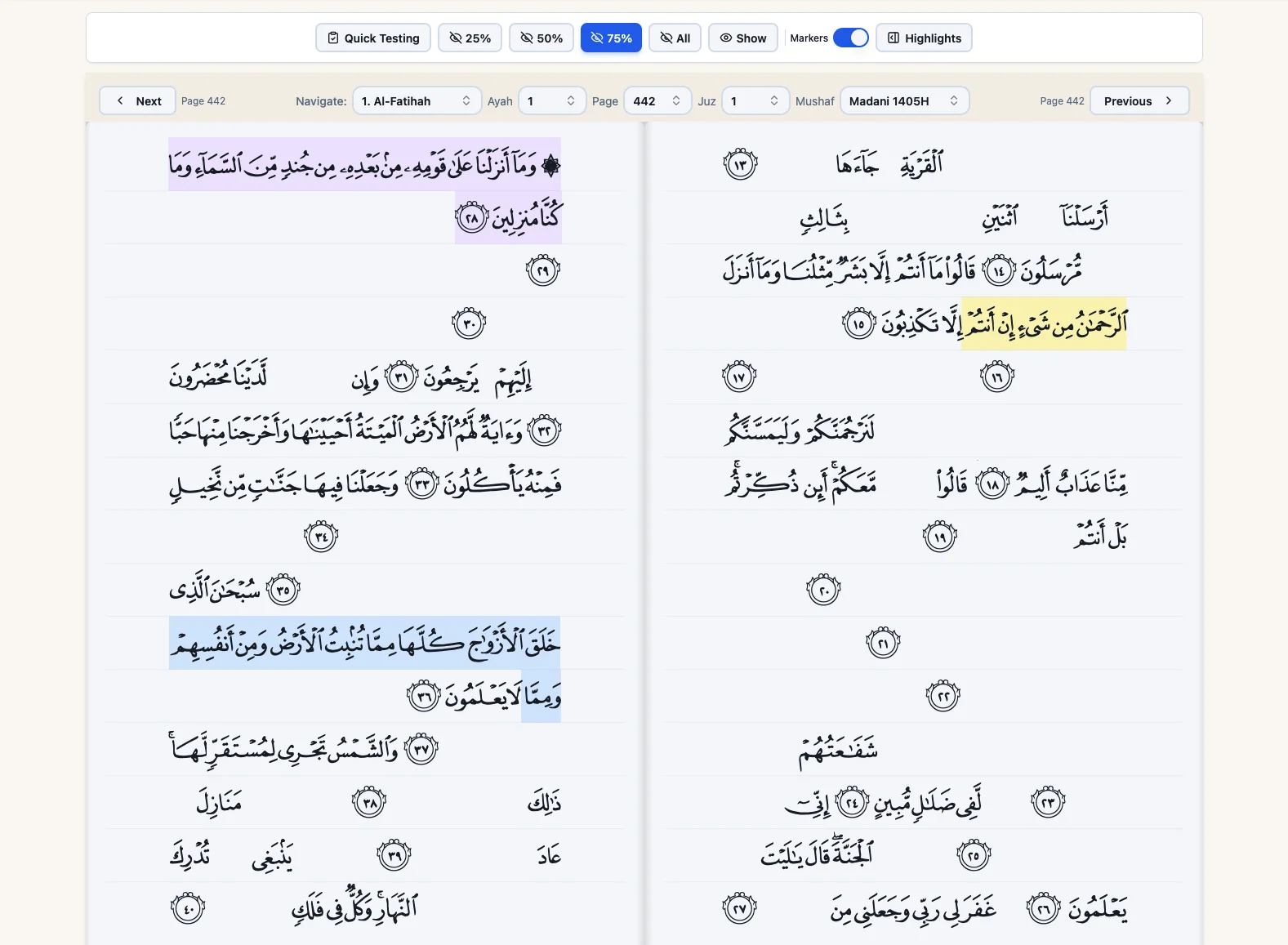
GCSE revision has taught you two things that work just as well for Quran. Spaced practice: little and often beats one long cram. And retrieval practice: closing the book and testing yourself beats rereading your notes. For hifz, that means reciting with the mushaf closed and being tested from random points, not just reading the page again. We explain why in why you can recite a surah but freeze when you’re tested.
If you want those tests set for you, Quran Memorizer’s free test asks you what comes next, what came before and which surah an ayah is from, on whatever you’ve marked as memorized. It works on your phone, which makes it a decent use of the bus home.
For parents
The students who manage both usually have someone at home holding the routine steady. Help with the timetable more than the targets. Make the morning slot easy, notice the revision rather than only the new pages, and expect the new lessons to slow down in Year 11. That slowdown is part of the plan. It doesn’t mean the hifz is going wrong. Our routine for busy families has more on making it fit around the rest of the week.
Two other times of year need a plan of their own. The evenings in Years 7 to 9, when madrasa and homework compete, are covered in helping your child revise at home. And the long break after exams is the best chance all year to repair older juz: see our summer holiday hifz plan.
Questions people ask
Should I stop hifz for my GCSEs?
Most students don’t need to stop completely. Pause new lessons during exam weeks and mocks, and keep a smaller daily revision going. A full stop for months is what usually costs people the juz they already had.
Can you do hifz and still get top GCSE grades?
Yes. UK Islamic schools publish results every year from pupils who did both. Jamiatul Ummah School, for example, reported a 2018 pupil who achieved the equivalent of ten A*s alongside memorizing the whole Quran.
How much should I memorize a day during Year 11?
Whatever you can revise properly. For many students that’s three to five lines on school days and nothing new in exam weeks. A small amount you remember is worth more than a page you lose by June.
When should I revise hifz on a school day?
New lessons go best in the morning, after Fajr, when your mind is fresh. Revision can go wherever your day has gaps: the bus, lunch, the madrasa, or your prayers.