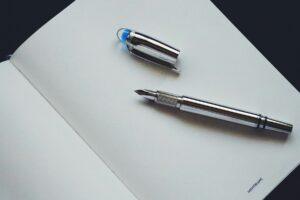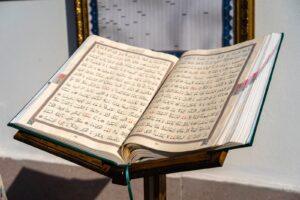
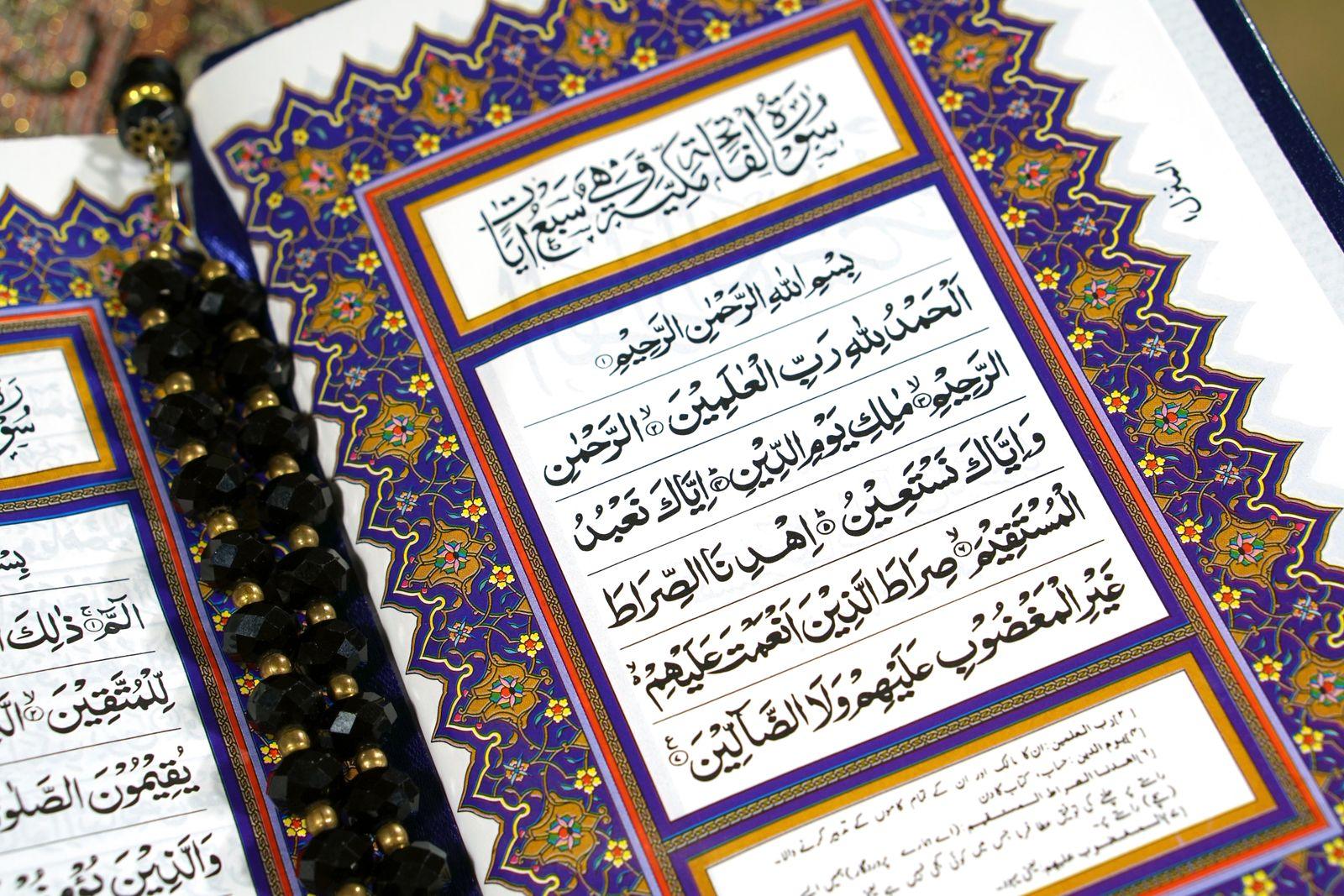
The Quran has 604 pages in the standard Madani mushaf, the copy printed by the King Fahd Complex in Madinah, with 15 lines on each page. The common IndoPak copies run from about 548 pages (16 lines a page) to about 868 (13 lines a page), so the number on your shelf mostly comes down to how many lines the printer fits on a page.
That’s why two people can turn to the last page of their mushafs, their printed copies of the Quran, and come back with answers more than 300 pages apart, though both hold the same Quran, word for word. Below: the count for each common mushaf and where each number comes from, then pages per juz, lines, ayat and how long a full reading takes.
At a glance
- Pages: 604 in the Madani mushaf, 15 lines a page.
- Juz (para): 30. Most are 20 pages. Juz 1 is 21, juz 6 and 10 are 19, juz 7 and 11 are 21, and juz 30 is 23.
- Hizb: 60, about 10 pages each. A rub’ (quarter of a hizb) is about 2.5 pages.
- Surahs and ayat: 114 surahs and 6,236 ayat in the Kufan count used by Hafs mushafs.
- Words: about 77,400 in Arabic.
- IndoPak copies: 610 to about 627 pages (15-line), 548 to about 563 (16-line), about 847 to 868 (13-line).
- Reading time: about 18 to 48 hours at a trained reciter’s pace. Alafasy takes 29.5 hours, roughly 3 minutes a page.
- To finish in a month: 20 pages a day.
How many pages are in a 13, 15 or 16-line Quran?
These are the mushafs you’re likely to find on a shelf at home or in the masjid. Where there’s a range, the low number is the bare layout, from Al-Fatihah to the last line of An-Nas, as it appears in published page-layout data. The high number is what printed copies are listed at in their publishers’ own stores as of October 2026, and that includes the pages before and after the text.
| Mushaf | Lines | Pages |
|---|---|---|
| Madani (Hafs) | 15 | 604 |
| Turkish | 15 | 604 |
| Warsh (King Fahd data) | 15 | 604 (other prints vary) |
| IndoPak 15-line | 15 | 610 to 627 |
| IndoPak 16-line | 16 | 548 to 563 |
| IndoPak 13-line | 13 | 847 to 868 |
Sources: page-layout data from the Quran Foundation’s page layout guide and api.quran.com; Taj Company and Darussalam listings for printed IndoPak copies; Turkey’s Official Gazette of 2 November 2022 for the Turkish standard. IndoPak counts vary by publisher and printing, and so do Warsh prints from outside the King Fahd Complex, so read those as ranges.
15-line Madani mushaf: 604 pages
This is the mushaf from the King Fahd Glorious Quran Printing Complex, in the Uthmani script and the calligraphy of Uthman Taha, and it’s the layout quran.com’s page numbers follow. It sets 15 lines on a page, and every page ends at the end of an ayah. The 604 counts both sides of each sheet, so the text fills 302 leaves of paper, before the covers and end pages.
The total has stayed at 604 through the 1405H (1984 to 1985), 1421H (2000 to 2001) and 1441H (2019 to 2020) printings, even though 56 ayat moved to a different page between the first two.
Two pages break the 15-line pattern. Page 1 holds Al-Fatihah alone, seven lines inside an ornamental frame, and page 2 holds Al-Baqarah 2:1 to 2:5 in six. At the far end, page 604 holds Al-Ikhlas, Al-Falaq and An-Nas, a last page so standard that Turkey’s printing rules require it.
15-line IndoPak Quran: 610 pages and up
IndoPak (also called Nastaleeq or Persian script) is the script taught across Pakistan, India and Bangladesh, with its own letter shapes and vowel placement. If the Quran Sharif on your family’s shelf came from that part of the world, it’s almost certainly IndoPak.
Two digitized 15-line layouts come to exactly 610 pages: one from Qudratullah in Lahore, and one printed by the King Fahd Complex itself. Printed copies list a few more. Darussalam’s 6×9 inch 15-line edition is listed at 616 pages and its large 7×10 inch edition at 627. Taj Company doesn’t give page counts for its 15-line copies.
16-line IndoPak Quran: about 548 to 563 pages
Taj Company’s 16-line layout, the one in the Quran Foundation’s data, is 548 pages. Taj’s own 16-line Hafizi edition (Hafizi is the label publishers give copies meant for memorizers; this one is code 55-2L) is listed at 560, and Darussalam’s 16-line copies run from 552 pages (pocket size) to 563. That last number is a small lesson in reading listings: Darussalam’s Hafizi 7A is listed at 562 pages on its US store and 563 on its UK store. Same book.
13-line IndoPak Quran: about 847 to 868 pages
Thirteen lines means bigger letters and a lot more paper. Digitized 13-line layouts come to 847 pages (Taj Company) and 849 (Qudratullah). On the shelf, Taj lists its standard 13-line editions (3U, 3A, 3Q and others) at 860 pages, and Darussalam lists its 13-line copies anywhere from 858 to 868.
Darussalam’s own product page gives the reason: its 13-line editions share one page layout and break in the same places. So the ten-page spread between its listings is front and back matter, and a reader can move between those copies without the pages shifting under them.
Why Turkish copies also end on page 604
In Turkey the layout is set by law. The printing rules of Diyanet, Turkey’s Presidency of Religious Affairs, were published in the Official Gazette (Resmî Gazete, issue 32001) on 2 November 2022. They require 15 lines a page and every page ending on an ayah. Each juz must end on page 20 or a multiple of it, and the last page must be numbered 604 and close with Al-Ikhlas, Al-Falaq and An-Nas.
The regulation even defines a juz as the twenty-page section of the mushaf. Turkish copies in shops still run past 604, because the same rules put the colophon (the printer’s closing note), the khatm dua, the key to the stop signs and the index after the last page of text.
We haven’t matched Turkish and Madani copies page for page, though, so don’t assume page 300 in one is page 300 in the other. Even the first juz differs: under the Turkish rule it ends on page 20, while the Madani mushaf’s runs to page 21.
Warsh copies vary by printer
Warsh is a different riwayah, or transmitted reading, of the Quran. The King Fahd Complex prints its Madani mushaf in Warsh as well as Hafs, and its Warsh text data sits on the same grid: 604 pages of 15 lines, with all 114 surahs starting on the same page numbers as the Hafs mushaf. One small layout difference: four Warsh ayat run over from one page to the next (4:44, 20:86, 24:36 and 24:42), which never happens in the Hafs layout.
Warsh copies printed in North and West Africa, usually in Maghribi script, follow their own layouts. We couldn’t find a standard page count for them that we’d stand behind, so check the copy in your hands.
The less common line counts
Publishers also print 9-, 11-, 12-, 14-, 17- and 18-line copies, and they stretch the range a long way. Darussalam’s 17-line pocket mushaf is listed at 492 pages. Taj’s bold 11-line edition is listed at 968, Darussalam’s extra-large 11-line at 1,207, and a digitized 9-line layout from the Gaba press runs to 1,890 pages.
How many pages is the Quran in English?
There’s no standard count, because an English translation has no fixed page layout the way a mushaf does. Length depends on the translation, the type size and whether the Arabic is printed alongside. As of October 2026, Dr. Mustafa Khattab’s The Clear Quran in English only is listed at 385 pages in Darussalam’s paperback and 620 in a single-column paperback edition.
Some bilingual editions keep the full 15-line Arabic page and run the English around its borders. Darussalam’s medium Saheeh International edition is built that way, and it’s listed at 609 pages, only five more than the Madani mushaf itself.
Why don’t all Qurans have the same number of pages?
Every one of these copies holds the same preserved Quran.
“Indeed, it is We who sent down the message [i.e., the Qur’ān], and indeed, We will be its guardian.”
Al-Hijr 15:9, Saheeh International translation. Compare translations on quran.com
Everything that varies is in the printing. Six things decide how many pages a copy has and where each page turns.
- Lines per page do most of the work. The same text needs about 40% more pages at 13 lines than at 15, and about 10% fewer at 16. That alone explains most of the gap between 548, 604 and 868.
- Script matters too. The King Fahd Complex prints a 15-line mushaf in Uthmani script and another in IndoPak script. Same publisher, same 15 lines, yet the IndoPak one needs 610 pages to the Uthmani one’s 604. It keeps pace with the Madani mushaf page for page through most of the Quran, then needs six more pages for the dense short surahs of juz 29 and 30.
- Some lines hold no ayat. The Madani mushaf gives 114 lines to surah titles and 112 to basmalahs, about 15 pages’ worth. The framed opening pages leave another 14 slots empty, roughly one page more. A third of the titles (37 of 114) fall in juz 30, which is why it’s the longest juz in pages.
- Pages are built to end on an ayah. The Madani and Turkish layouts stretch or tighten lines so that each page closes on a complete ayah and the juz fall every 20 pages. That fixed grid is what gives exactly 604. Page 48 shows how far it goes: it holds a single ayah, 2:282, the long ayah about recording debts, filling all 15 lines.
- Publishers add pages around the text. The khatm dua, an index, a key to the stop signs, sometimes a tajweed guide. It’s why one 13-line layout shows up in listings at 858, 864, 867 and 868 pages.
- Print years move page breaks. This one leaves the total alone and shifts what’s on each page. The King Fahd Complex’s 1405H and 1421H printings are both 604 pages, yet 56 ayat sit on a different page, spread over 25 pages.
How many lines are on a page of the Quran?
A page of the Madani mushaf has 15 lines. IndoPak copies come in several line counts, and the common ones are 13, 15 and 16. If you’re asking about a “15-line Quran” in particular, the script decides it: 604 pages in Uthmani script, 610 or a few more in IndoPak.
Count the Madani mushaf line by line and you get 9,060 slots (604 × 15). Of those, 8,820 hold text. Spread over 30 juz, that’s about 294 lines of text in an average juz, from about 271 in juz 30 to about 301 in juz 7. If you plan in lines, those are the numbers to divide.
Ayat per page vary a lot, because ayat vary in length. Ayah 2:282 fills page 48 by itself, while page 585 of the 1405H print holds all 42 ayat of ‘Abasa, most of them two to four words long. The average is 10.3 ayat a page (6,236 ÷ 604).
This matters if you’re comparing plans across mushafs, because a page holds a different amount of Quran in each. The text on one Madani page fills about 1.4 pages of a 13-line copy and about 0.9 of a 16-line one. So “a page a day” on a 13-line mushaf is roughly 30% less Quran than a page a day on the Madani mushaf, and on a 16-line copy it’s about 10% more.
Our guide to how much to memorize each day sets its targets in Madani pages, so convert with those ratios if yours is different.
How many pages are in a juz (para)?
A juz, or para as it’s called in Urdu, is 20 pages in most of the Madani mushaf. Counted from the page each juz starts on, 24 of the 30 are exactly 20. Juz 1 runs 21 pages (1 to 21) and juz 30 runs 23 (582 to 604). Juz 6 and 10 come out at 19, and juz 7 and 11 at 21, because juz 7 and 11 begin a few lines from the bottom of the page before. The average works out at 20.1 (604 ÷ 30).
Juz 30, known as Juz Amma, runs long because 37 surahs begin in it, from An-Naba to An-Nas, and each needs a title line and a basmalah. That’s 74 lines, about five pages, which leaves juz 30 with the fewest lines of text of any juz (about 271) even though it has the most pages. Starting your hifz there? Our guide to memorizing Juz Amma sets out the order and a plan.
You’ll find a juz quoted online as 32 pages and a hizb as 18. Those figures don’t fit the Madani mushaf. Thirty-two pages a juz would fit an 11-line copy (968 pages ÷ 30 is about 32). In the Madani mushaf a hizb is half a juz, so about 10 pages, and a rub’ is about 2.5.
Tip: To find where a juz starts in the Madani mushaf, take the juz number, subtract 1, multiply by 20 and add 2. Juz 17 is (17 – 1) × 20 + 2 = page 322, where Al-Anbiya begins. It works for every juz from 2 to 30 apart from juz 7 and 11.
| Juz | Starts at | Madani pages | Ayat |
|---|---|---|---|
| 1 | 1:1 | 1-21 | 148 |
| 2 | 2:142 | 22-41 | 111 |
| 3 | 2:253 | 42-61 | 126 |
| 4 | 3:93 | 62-81 | 131 |
| 5 | 4:24 | 82-101 | 124 |
| 6 | 4:148 | 102-120 | 110 |
| 7 | 5:82 | 121-141 | 149 |
| 8 | 6:111 | 142-161 | 142 |
| 9 | 7:88 | 162-181 | 159 |
| 10 | 8:41 | 182-200 | 127 |
| 11 | 9:93 | 201-221 | 151 |
| 12 | 11:6 | 222-241 | 170 |
| 13 | 12:53 | 242-261 | 154 |
| 14 | 15:1 | 262-281 | 227 |
| 15 | 17:1 | 282-301 | 185 |
| 16 | 18:75 | 302-321 | 269 |
| 17 | 21:1 | 322-341 | 190 |
| 18 | 23:1 | 342-361 | 202 |
| 19 | 25:21 | 362-381 | 339 |
| 20 | 27:56 | 382-401 | 171 |
| 21 | 29:46 | 402-421 | 178 |
| 22 | 33:31 | 422-441 | 169 |
| 23 | 36:28 | 442-461 | 357 |
| 24 | 39:32 | 462-481 | 175 |
| 25 | 41:47 | 482-501 | 246 |
| 26 | 46:1 | 502-521 | 195 |
| 27 | 51:31 | 522-541 | 399 |
| 28 | 58:1 | 542-561 | 137 |
| 29 | 67:1 | 562-581 | 431 |
| 30 | 78:1 | 582-604 | 564 |
Four juz start partway down a page, and we’ve counted that page with the juz that begins on it. Juz 4 starts on the second line of page 62 and juz 26 on line 9 of page 502. Juz 7 and juz 11 jump the gun further, starting in the last few lines of the page before (5:82 on line 12 of page 121, 9:93 on line 13 of page 201). In lines, the difference is small: juz 7 has about 301 lines of text against an average of 294.
Notice how little the page count moves compared with the ayat. Juz 6 has 110 ayat and juz 30 has 564, yet they’re 19 and 23 pages, because long ayat and short ayat fill the same 15 lines. Fifty ayat take about two pages in juz 30 and about nine in juz 6, which is why we measure hifz in pages and lines. For what’s inside each one, see our guide to the 30 juz of the Quran.
Pages per para in IndoPak copies
Across South Asia a juz is usually called a para, or sipara. The 15-line IndoPak mushaf (610 pages) runs almost page for page with the Madani one until the last two para. In 26 of the 28 juz from 2 to 29, the juz starts on the same page number; juz 14 and juz 20 start one page earlier, on 261 and 381. The six extra pages all come at the end, where juz 29 runs 24 pages (562 to 585) and juz 30 runs 25 (586 to 610).
The 16-line copy (548 pages) averages about 18 pages a para, with 19 in juz 1 and 21 in juz 30 (528 to 548). For 13-line copies we don’t have a digitized layout with juz breaks, so treat this one as an estimate: about 28 pages a para, more in the 30th. Darussalam’s five-para 13-line volumes are listed at 138 to 164 pages, which fits.
Al-Baqarah alone covers 48 Madani pages (2 to 49), more than two juz. An-Nisa runs 30 pages and Al-Imran 27.
How many ayat and words are in the Quran?
The Quran has 6,236 ayat, counted the way the Madani mushaf and every other Hafs mushaf counts them. This is the Kufan count, which the Madani mushaf’s closing note traces back through Abu ‘Abd al-Rahman al-Sulami to ‘Ali ibn Abi Talib.
It isn’t the only count. Other early counting traditions, from Basra, Damascus, Makkah and Madinah, arrive at totals between about 6,204 and 6,226. The counting schools agree on the text and differ on where some ayat end.
The King Fahd Complex’s Warsh data, for example, numbers 6,214. Al-Fatihah still has seven ayat there, but the basmalah isn’t numbered and the last ayah of the Hafs count is split in two. Al-Mulk has 30 ayat in Hafs and 31 in Warsh; Al-Kahf has 110 and 105.
Two other figures turn up in searches. 6,348 is the total if you add the 112 basmalahs that aren’t numbered as ayat (At-Tawbah has none, and Al-Fatihah’s is its first ayah). And 6,666 is a popular round number you’ll hear repeated, though no counting school arrives at it and you won’t find it in any mushaf.
Words are harder to pin down, since counts depend on how joined words are split. Our count of quran.com’s Uthmani text comes to about 77,400 Arabic words.
That makes the Quran far shorter than the Bible. The King James Version runs to about 790,000 English words in our count of the public-domain Project Gutenberg text, roughly ten times as many. Arabic often folds a prefix, a verb and its pronouns into one word that English writes as several, so treat it as a rough comparison.
How long does it take to read a page, a juz and the whole Quran?
At a steady murattal pace (measured, unhurried recitation, the style of the recordings below), a page takes about 3 minutes, a juz about an hour and the whole Quran about 30 hours. We measured each reciter’s 114 surah recordings, basmalahs and pauses included, and the full Quran runs from about 18 hours to nearly 48. All of these are murattal recordings apart from Al-Husary’s teaching recitation.
| Reciter | Whole Quran | Per juz | Per page |
|---|---|---|---|
| Ash-Shuraym | 18h 09m | 36 min | 1.8 min |
| As-Sudais | 21h 01m | 42 min | 2.1 min |
| Ad-Dossari | 25h 55m | 52 min | 2.6 min |
| Al-Minshawi | 28h 47m | 58 min | 2.9 min |
| Alafasy | 29h 32m | 59 min | 2.9 min |
| Abdul Basit | 30h 42m | 61 min | 3.0 min |
| Al-Husary | 42h 36m | 85 min | 4.2 min |
| Al-Husary (teaching) | 47h 34m | 95 min | 4.7 min |
These are trained reciters. Reading aloud with care over each letter, you’ll be slower than Alafasy at first. Budget about 4 minutes a page, Al-Husary’s murattal pace, until you’ve timed yourself. Al-Baqarah alone takes about 2 hours with Alafasy, under an hour and a half with Ash-Shuraym and over 3 hours with Al-Husary’s murattal. For every surah and juz timed, see how long it takes to recite the Quran.
How many pages a day to finish the Quran in Ramadan?
Twenty pages a day finishes the Madani mushaf in a month. The exact split for 30 days is 26 days of 20 pages and 4 days of 21. For a 29-day Ramadan it’s 24 days of 21 and 5 days of 20. Four pages after each salah makes 20 a day without one long sitting, about 12 minutes each at Alafasy’s pace, and the pages left over (4 in a 30-day month, 24 in a 29-day Ramadan) go on the last days.
| Finish in | Madani (604) | 16-line (548) | 13-line (about 848) |
|---|---|---|---|
| 1 year | 1.7 | 1.5 | 2.3 |
| 60 days | 10.1 | 9.1 | 14.1 |
| 30 days | 20.1 | 18.3 | 28.3 |
| 29 days | 20.8 | 18.9 | 29.2 |
| 15 days | 40.3 | 36.5 | 56.5 |
| 7 days | 86.3 | 78.3 | 121.1 |
Figures are pages a day. The 15-line IndoPak (610 pages) sits within a fraction of a page of the Madani column. Working the other way, from what you can manage: a page a day finishes the Madani mushaf in 604 days, a little under 20 months, 2 pages in 302, 5 pages in 121 and 10 pages in 61. Finishing in 15 days means about 40 pages, or two juz, a day.
The month and the seven days in the table come from the Sunnah. The Prophet ﷺ told ‘Abdullah ibn ‘Amr to recite the whole Quran in a month, and when ‘Abdullah said he could do more, allowed seven days and told him not to finish in less (Sahih al-Bukhari 5054). In another narration he said that someone who finishes in under three days doesn’t understand it (Jami’ at-Tirmidhi 2949, graded sahih). In Madani pages, that month is 20 a day and the seven days about 86.
Free tool
Want the exact pages for each day? The khatm planner splits all 604 pages across Ramadan or any dates you choose, in one sitting or across the five daily prayers, and every day ends at the bottom of a page. Open the Quran khatm planner →
If you’ve memorized the whole Quran, the same 20 pages a day, recited from memory, is a juz a day and a full revision every month: the pace behind our revision cycle for all 30 juz.
Which page count should a hifz student use?
The one in the mushaf you memorize from, and only that one. The page you picture while reciting has to match the page in front of you when you check: the line each ayah sits on, the ayah where the page turns. Switch layouts and all of that moves.
Publishers say the same. Darussalam’s note on its 13-line editions advises anyone who has started memorizing to stay with the line count they learned from, since fewer lines means larger text but different page breaks. “Hafizi” on a cover doesn’t settle it either. Taj sells 13-, 15- and 16-line copies under that label.
If you’re starting fresh, we’d pick the 604-page Madani mushaf for one reason: its grid is exact. Every page ends on an ayah and almost every juz starts on a predictable page, so a plan that says “pages 322 to 326” means the same five pages in every copy of that printing.
If you learned to read in IndoPak script, stay with IndoPak. The 15-line IndoPak copy shares 26 of the 28 juz start pages from juz 2 to 29 with the Madani mushaf, and the 13-line copy’s larger letters are easier on some eyes.
Check the print year too. If you memorized juz 29 and 30 from a 1405H Madani copy, a 1421H copy will feel slightly off between pages 564 and 600, where 18 of the 25 changed pages sit. To tell the two prints apart, open page 121: it starts at 5:77 in the 1405H print and at 5:78 in the 1421H.
Quran Memorizer follows the same principle. Its mushaf is the 604-page Madani layout, with the same pages and lines as the printed copy, and on iPhone and iPad you can pick the V1 or V2 Madani page style. One test mode checks your visual memory of the mushaf page, so the picture in your head meets the real one. It’s Madani only, so it fits best if that’s the mushaf you memorize from.
Pick one mushaf and do all your memorizing and revising from it, every day. Before long, page 322 won’t feel like a number. It’ll be where Al-Anbiya begins. When you’re ready to test yourself on those 604 pages, Quran Memorizer is on iPhone and iPad and the web.