The last two ayat of Surah Al-Baqarah, 2:285-286, are among the most beloved passages in the Quran. The Prophet ﷺ said that whoever recites them at night, they will suffice him (Sahih al-Bukhari 5009, Sahih Muslim 807).
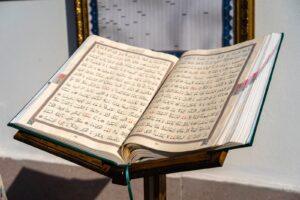
They’re also a complete dua: a statement of faith, followed by a series of requests for forgiveness, relief and help. Together they take up the last part of page 49 of the Madani mushaf.
Ayah 285: the statement of faith
Break it into five phrases.
ءَامَنَ ٱلرَّسُولُ بِمَآ أُنزِلَ إِلَيْهِ مِن رَّبِّهِۦ وَٱلْمُؤْمِنُونَ
Amanar-rasulu bima unzila ilayhi mir-rabbihi wal-mu’minun.
كُلٌّ ءَامَنَ بِٱللَّهِ وَمَلَـٰٓئِكَتِهِۦ وَكُتُبِهِۦ وَرُسُلِهِۦ
Kullun amana billahi wa mala’ikatihi wa kutubihi wa rusulih.
لَا نُفَرِّقُ بَيْنَ أَحَدٍ مِّن رُّسُلِهِۦ
La nufarriqu bayna ahadim-mir-rusulih.
وَقَالُوا۟ سَمِعْنَا وَأَطَعْنَا
Wa qalu sami’na wa ata’na.
غُفْرَانَكَ رَبَّنَا وَإِلَيْكَ ٱلْمَصِيرُ
Ghufranaka rabbana wa ilaykal-masir.
“The Messenger has believed in what was revealed to him from his Lord, and [so have] the believers. All of them have believed in Allah and His angels and His books and His messengers, [saying], ‘We make no distinction between any of His messengers.’ And they say, ‘We hear and we obey. [We seek] Your forgiveness, our Lord, and to You is the [final] destination.’”
Al-Baqarah 2:285, Saheeh International translation. Compare translations on quran.com
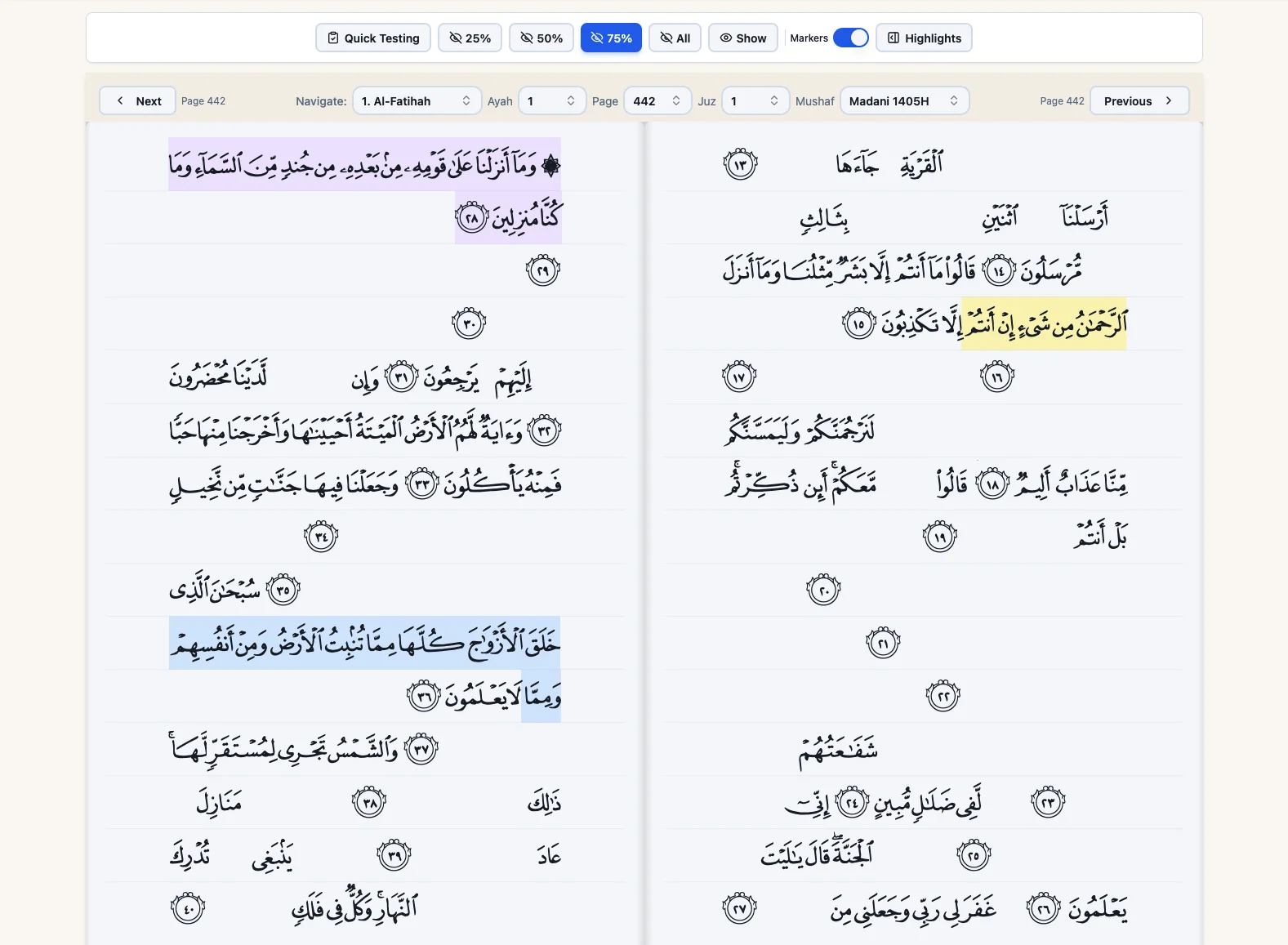
Memorized both ayat? Test your hifz with the mushaf closed. You choose the portion, and the test asks you to carry on from an ayah inside it.
Ayah 286: the duas
لَا يُكَلِّفُ ٱللَّهُ نَفْسًا إِلَّا وُسْعَهَا
La yukallifullahu nafsan illa wus’aha.
لَهَا مَا كَسَبَتْ وَعَلَيْهَا مَا ٱكْتَسَبَتْ
Laha ma kasabat wa ‘alayha maktasabat.
Then come three requests, each beginning rabbana (our Lord), and a closing plea:
رَبَّنَا لَا تُؤَاخِذْنَآ إِن نَّسِينَآ أَوْ أَخْطَأْنَا
Rabbana la tu’akhidhna in nasina aw akhta’na.
رَبَّنَا وَلَا تَحْمِلْ عَلَيْنَآ إِصْرًا كَمَا حَمَلْتَهُۥ عَلَى ٱلَّذِينَ مِن قَبْلِنَا
Rabbana wa la tahmil ‘alayna isran kama hamaltahu ‘alal-ladhina min qablina.
رَبَّنَا وَلَا تُحَمِّلْنَا مَا لَا طَاقَةَ لَنَا بِهِۦ
Rabbana wa la tuhammilna ma la taqata lana bih.
وَٱعْفُ عَنَّا وَٱغْفِرْ لَنَا وَٱرْحَمْنَآ
Wa’fu ‘anna waghfir lana warhamna.
أَنتَ مَوْلَىٰنَا فَٱنصُرْنَا عَلَى ٱلْقَوْمِ ٱلْكَـٰفِرِينَ
Anta mawlana fansurna ‘alal-qawmil-kafirin.
“Allah does not charge a soul except [with that within] its capacity. It will have [the consequence of] what [good] it has gained, and it will bear [the consequence of] what [evil] it has earned. “Our Lord, do not impose blame upon us if we have forgotten or erred. Our Lord, and lay not upon us a burden like that which You laid upon those before us. Our Lord, and burden us not with that which we have no ability to bear. And pardon us; and forgive us; and have mercy upon us. You are our protector, so give us victory over the disbelieving people.””
Al-Baqarah 2:286, Saheeh International translation. Compare translations on quran.com
Tips for the tricky parts
The three “rabbana” requests
The second and third requests are very close:
- wa la tahmil ‘alayna isran (do not place on us a burden)
- wa la tuhammilna ma la taqata lana bih (do not burden us with what we cannot bear)
The verb changes from tahmil to tuhammil. One way to remember: the first is about a specific heavy burden (isr) placed on earlier nations; the second is about anything beyond our strength.
The three requests for mercy
Wa’fu ‘anna, waghfir lana, warhamna: pardon, forgive, have mercy. Many students remember them as a sequence that grows from wiping away the sin, to covering it, to mercy beyond it.
A short plan
- Day 1: ayah 285, phrase by phrase, then as a whole.
- Day 2: ayah 286 up to aw akhta’na.
- Day 3: the rest of ayah 286, then both ayat together, five times.
Recite them every night before you sleep, and they’ll be very hard to forget.
Related
If you’re memorizing short, high-virtue passages, Ayat al-Kursi is a natural companion: How to Memorize Ayat al-Kursi. And if you want to go on to the whole surah, see How to Memorize Surah Al-Baqarah.