“Finish the ayah” is about the simplest Quran game there is. Someone recites the start of an ayah and you carry on from memory until it ends. There’s nothing to set up, it works for a five-year-old and for a hafiz, and within a couple of rounds you’ll know exactly how solid your memorization really is.
It’s also older than it looks. Teachers have tested students this way for generations: read a few words from somewhere in the surah and wait to see if the student picks it up. The game just makes that a little more fun, and lets you play it at the dinner table.
Here are the rules, then ten ways to play, from easy to properly hard, plus versions for children, classes and playing alone.
At a glance
- Players: one or more.
- Time: 5 to 20 minutes.
- You need: a mushaf, or a quiz app.
- Good for: checking your hifz, family evenings, warming up a halaqah.
How to play finish the ayah
- Agree on what’s in play: one surah, one juz, or everything everyone has memorized.
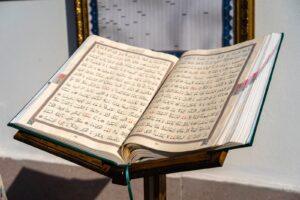
- The asker opens the mushaf at a random page in that range and recites the first few words of an ayah.
- You finish the ayah from memory.
- The asker checks it against the mushaf, word for word, right to the last letter.
- Swap roles, or pass to the next player.
If you want to keep score, try two points for a clean finish, one if you needed a prompt, and nothing if the mushaf had to come out. Keep a tally over a week instead of a single evening. Watching the numbers creep up is more satisfying than one big win, and it takes the pressure off a bad night.
Stop mid-phrase. If the asker pauses at a natural break, the rhythm gives half the answer away.
10 ways to play, from easy to hafiz level
1. The classic
Hear the beginning, recite the rest. It sounds easy, and it often is, right up until you hit a passage where two ayat start the same way and end differently. Endings are where most slips happen.
2. Start the ayah
Flip it around. The asker reads the end of an ayah and you supply the beginning. This one trains a moment everyone knows from salah: you remember the middle of an ayah perfectly well, but you can’t for the life of you remember how it starts.
3. What comes next?
The asker recites a whole ayah and you give the one that follows. This is the real skill behind reciting from memory, carrying on smoothly from wherever you’re dropped in. If you only play one version, play this one.
4. What came before?
Same idea, backward. You hear an ayah and recite the one before it. Most people find this far harder than they expect, and that’s exactly why huffaz like it. It shows you, very quickly, which ayat are only linked in one direction.
5. Name the surah
One ayah, and you name the surah it’s from. In Juz Amma it’s almost too easy. Across the long surahs, where themes and phrasing overlap, it gets humbling fast.
6. By ear
Play a short clip from a recitation and name the surah, no page in sight. That’s how you meet the Quran most days anyway: hearing the imam in salah and trying to place where he is.
7. The similar-ayat duel
Pick a phrase that appears in more than one place and make each player say which occurrence the asker means and what comes right after it there. For a gentle start with children, Surah Ar-Rahman works well: its refrain appears 31 times, and the challenge is saying what follows each one. Our guide to memorizing similar verses has harder pairs for adults.
8. Bridge the surahs
The asker recites the last ayah of a surah and you recite the first ayah of the next one, so the end of Al-Ikhlas leads into the opening of Al-Falaq. It sounds trivial, but most of us memorized each surah on its own and never practiced the joins.
9. Where on the page?
The asker names an ayah and you say which page it’s on and roughly where: top, middle or bottom. Plenty of huffaz rely on this mental picture of the page without ever having tested it.
10. The random spot test
Open anywhere in your whole memorized range and keep going for half a page. This is the closest thing to a real exam, and it’s how many teachers check a student before moving on. The random ayah spot test has the full method.
Playing with children
Start with what they already know, usually the short surahs at the end of Juz Amma, so they win most rounds early on. Build their confidence first and make it harder later.
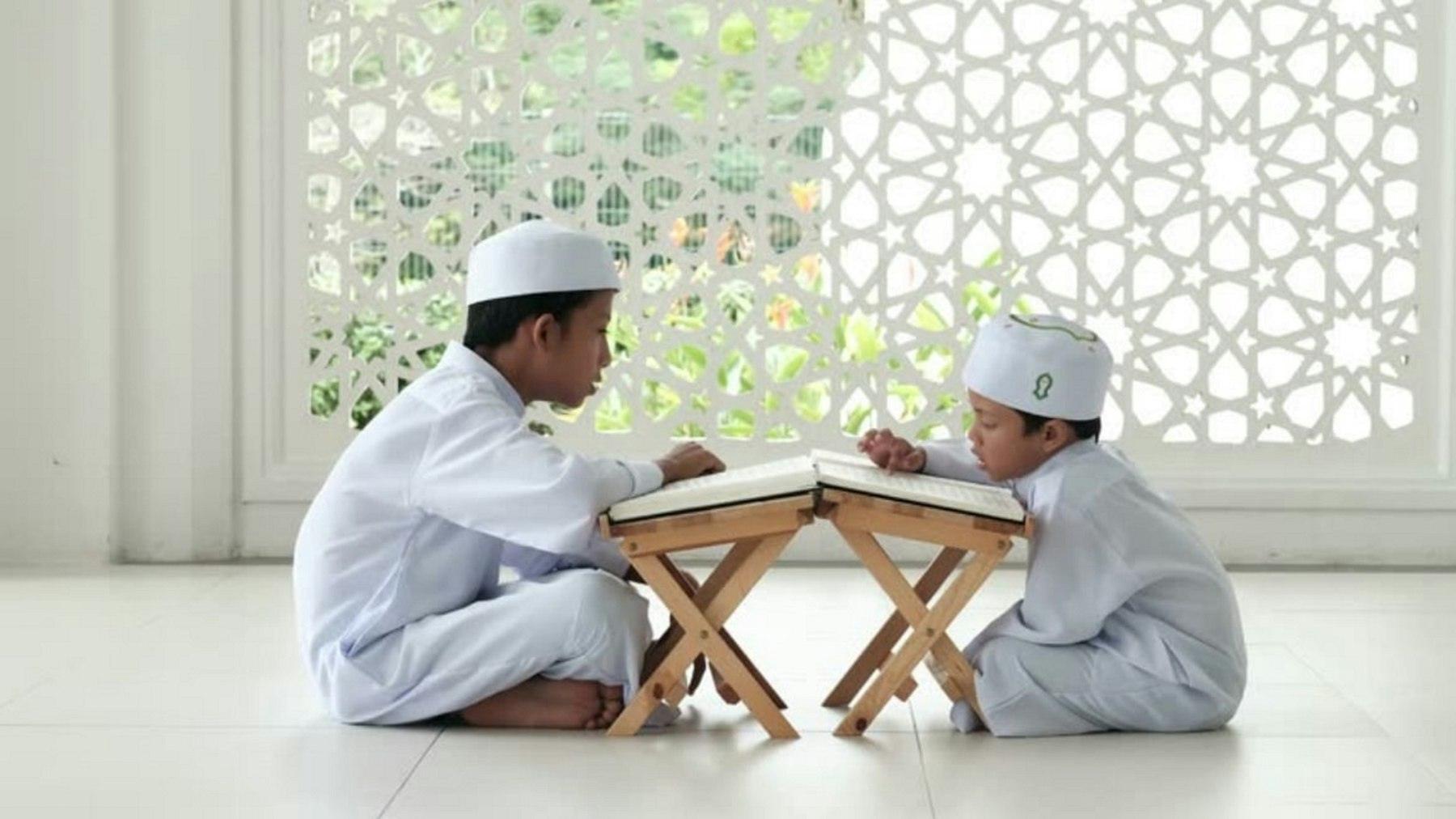
Give hints in small steps: a pause first, then the first word, then the first two. Play in teams if one child is much younger, a parent with each child, so nobody ends up being tested alone. And whenever a child catches a mistake in your recitation, give them a point. They’ll start listening very closely, which is what you want.
Read next: how to help your child memorize the Quran.
In a halaqah or classroom
Five minutes at the start of class makes a good warm-up. Go around the circle with “what comes next”, one ayah each, quickly enough that nobody has time to drift off. Keep “what came before” for students who are close to finishing a juz. It’ll show you who’s ready and who needs another week.
The finish the ayah challenge online
Short videos where someone recites the opening of an ayah and others finish it can be a lovely way to share the Quran. A little adab goes a long way. Recite carefully, with tajweed, as you would anywhere else. Correct mistakes kindly, and never treat an ayah as the punchline. Choose a quiet, respectful setting, and leave the background music out.
Playing on your own
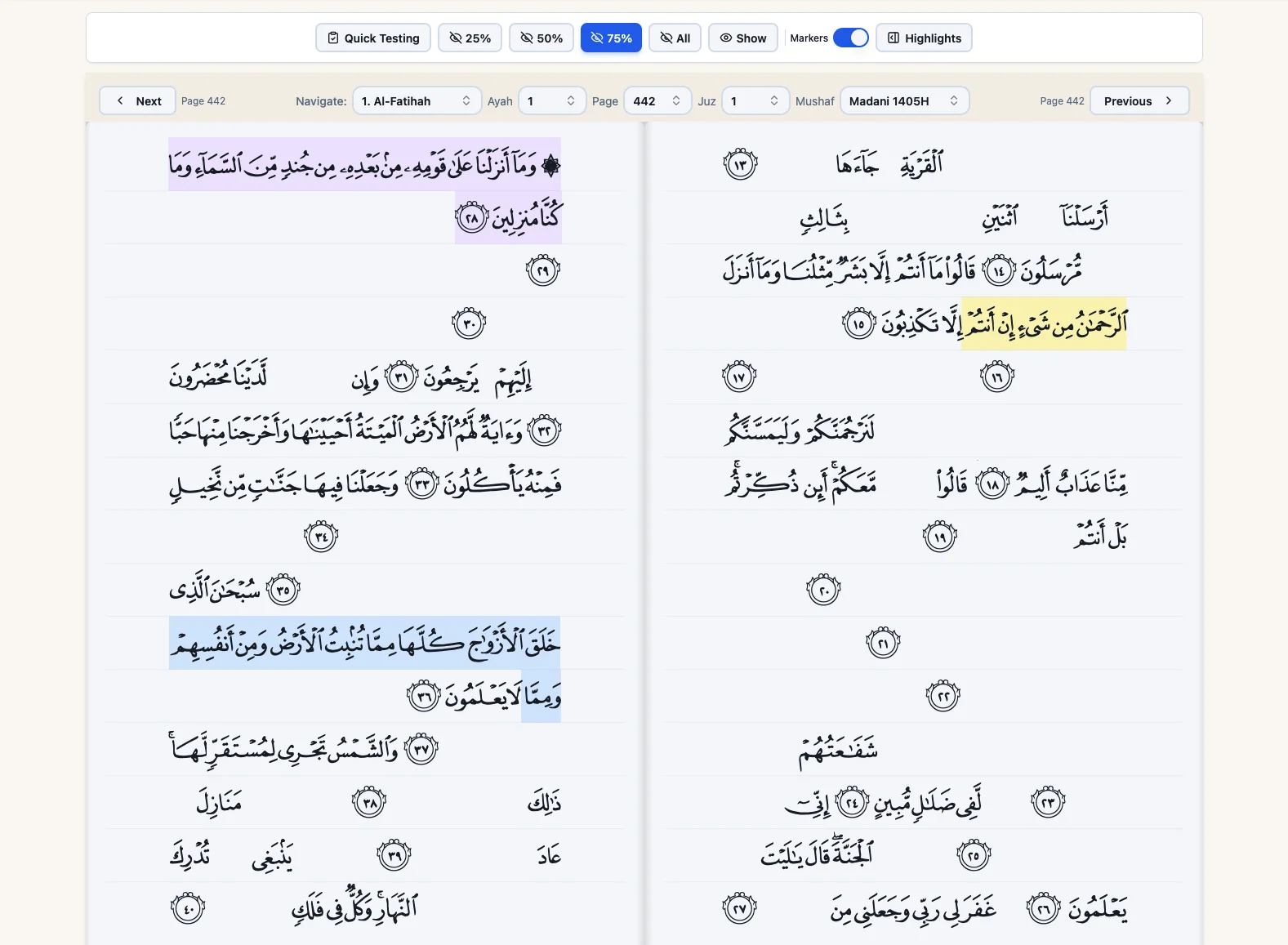
You don’t need anyone else. Cover the page with a card, slide it down to show just the first words of an ayah, and recite the rest before you reveal it. Or record yourself reading the opening of ten random ayat, leave it a day, then play it back and finish each one.
If you’d rather have it set up for you, our free hifz test turns these games into 16 question types, including finish the ayah, next and previous ayah, name the surah and a listening round, on any surah or juz you pick.
For more ways to check yourself with nobody listening, see how to test your hifz without a partner.
Try it tonight with one surah you know well and five rounds of “what comes next”. If every round is easy, switch to “what came before”. That’s where it gets interesting.