If you memorized part of the Quran years ago and can’t recite it now, you have probably come across a frightening narration or two about people who forget. Some people stop touching the Quran altogether because of the guilt. That’s the worst possible outcome, so let’s look at what the sources actually say.
The short version: the authentic hadith tell you to keep reciting because the Quran is easily forgotten, and they treat forgetting as something that happens to people. The harshest narrations about forgetting are weak. Scholars have still warned against neglecting the Quran until it’s lost, and the remedy in every case is the same: go back to it.
What the authentic hadith say
The clearest guidance comes from Sahih al-Bukhari. The Prophet ﷺ said it is a bad thing for someone to say “I have forgotten such-and-such ayah,” because he has been caused to forget it, and he told people to keep reciting the Quran because it escapes from people’s hearts faster than camels do (Sahih al-Bukhari 5032).
In another narration he swore that the Quran is more likely to slip away than a camel from its hobble, and told people to commit themselves to it (Sahih al-Bukhari 5033).
Notice what these hadith do. They take for granted that memorized Quran will be forgotten, and the instruction that follows is to keep reciting. They even teach you how to talk about it: say you were caused to forget rather than “I forgot”, which keeps the matter in Allah’s hands and avoids sounding careless about it.
Forgetting also happened to the Prophet ﷺ himself. Aishah narrated that he heard a man reciting at night and said, “May Allah have mercy on him,” because the man had reminded him of ayat he had been caused to forget (Sahih al-Bukhari 5038). If forgetting a passage were in itself a major sin, this would make no sense.
What the Quran says
Allah told the Prophet ﷺ in Surah Al-A’la:
“We will make you recite, [O Muhammad], and you will not forget,”
“Except what Allah should will. Indeed, He knows what is declared and what is hidden.”
Al-A’la 87:6-7, Saheeh International translation. Compare translations on quran.com
And the closing dua of Surah Al-Baqarah, which many of us recite every night, includes the words “Our Lord, do not impose blame upon us if we have forgotten or erred.” (Saheeh International, Al-Baqarah 2:286). Human forgetting is something we ask Allah to pardon, and He taught us to ask.
The narrations behind the fear
Two narrations are behind most of the warnings you hear:
- “Meeting Allah maimed.” A narration in Sunan Abi Dawud says that whoever learns the Quran and then forgets it will meet Allah on the Day of Judgment maimed, or empty-handed. Sunnah.com lists it as da’if (weak) according to Al-Albani (Sunan Abi Dawud 1474).
- “No sin worse.” A narration in Jami’ at-Tirmidhi says the Prophet ﷺ saw no sin of his Ummah worse than a surah or ayah that a man learned and then forgot. Sunnah.com lists it as da’if according to Darussalam (Jami’ at-Tirmidhi 2916).
Weak narrations aren’t a basis for declaring something a major sin. Scholars have still discussed the issue seriously. Some regarded neglecting what you memorized until it’s lost as blameworthy, and pointed to the general command to keep reciting. Others separated the person who turns away from the Quran from the person who loses passages through ordinary human weakness. If you want a ruling for your own situation, ask a scholar you trust.
What nobody says is that the answer is to stay away from the Quran. Every view ends in the same place: return to it.
Neglect and forgetting are different
It helps to be honest about which one you’re dealing with.
- Forgetting despite effort. You revise, but you keep forgetting some pages. That’s the nature of memory, and the hadith above describe it exactly. The fix is a better revision system, not guilt.
- Forgetting through neglect. Life got busy and the Quran stopped being part of your day. This is the one to take seriously, and the way to take it seriously is to start reciting again today, even a little.
In both cases, worrying without reciting changes nothing.
What to do now
- Find out what you still have. Recite each surah you once knew from memory and sort them into three groups: solid, shaky and gone. It usually goes better than people expect, because old memorization comes back faster than new.
- Protect what’s solid first. Put it into a light daily rotation so you don’t lose it while you work on the rest. Reciting it in salah is the easiest way to start.
- Work on the shaky parts. Read them from the mushaf a few times, then recite from memory. Our guide to re-memorizing the Quran after forgetting it walks through this step by step.
- Re-learn what’s gone like new material, at a pace you can keep. A few lines a day is fine.
- Change what caused the loss. Hifz is usually forgotten because there was no revision plan. The sabaq, sabqi and manzil system exists for exactly this, and how to remember what you memorize lays out the daily habits behind it.
Free tool
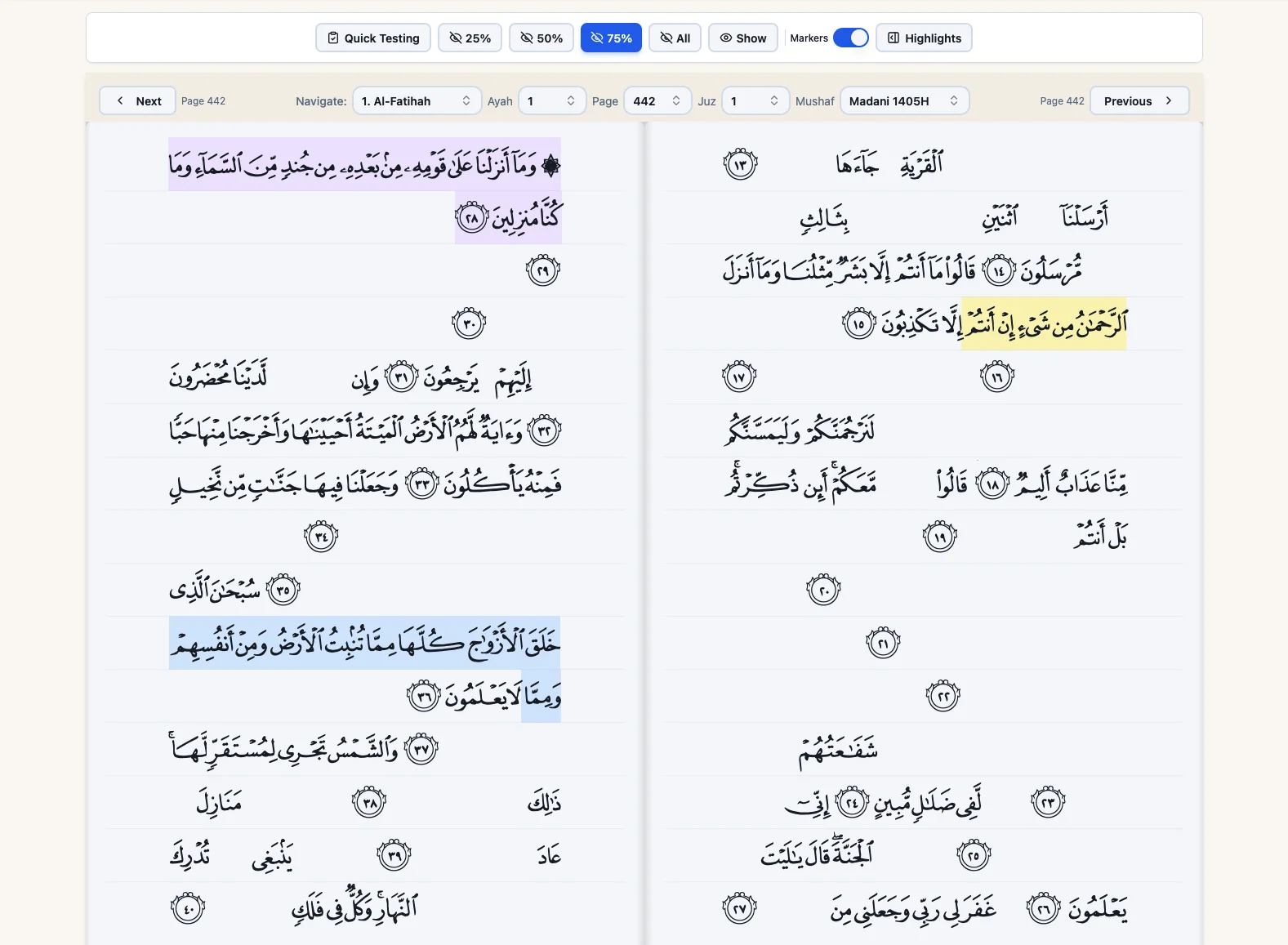
Re-memorizing what you’d forgotten? Turn it into a steady revision cycle, with extra rounds for the pages you keep forgetting. Open the manzil planner →
A daily revision habit
The Prophet ﷺ compared the Quran to a camel that runs off if you stop holding its rope. The rope is daily recitation. It doesn’t need to be long. A juz a week, a few pages a day, the surahs you know in your sunnah prayers: whatever you can keep up.
If you’d like help with the “which pages am I forgetting” part, the Quran Memorizer daily review tests you on what you’ve memorized and brings back the pages you hesitate on more often. However you do it, the important thing is to start reciting again.